Dial the list, not each number
Google Voice lists no power, parallel or automatic dialer. TopReach's power mode calls one number after another, and parallel mode rings several at once and connects the rep to whoever picks up.
Google Voice alternative
Google Voice is a business phone line you add to Google Workspace: calls, texts and voicemail on your phone, laptop or desk phone, and calls from Gmail. It has no dialer and no CRM. TopReach is a CRM with a power dialer, parallel dialer and two-way texting built in, for teams that call through lists and track deals. If you only need a simple line for each person on Workspace, Google Voice is the better fit, and this page explains why.
Why calling teams outgrow a simple line
Google Voice lists no power, parallel or automatic dialer. TopReach's power mode calls one number after another, and parallel mode rings several at once and connects the rep to whoever picks up.
Google Voice has no CRM. TopReach has contacts, companies, a deals pipeline with value by stage, custom fields, tags, tasks and a timeline of every call, text, email and note.
When a call isn't answered, TopReach can drop a voicemail, then send a text or an email on the days you choose. It tracks every touch, so nobody gets the same message twice.
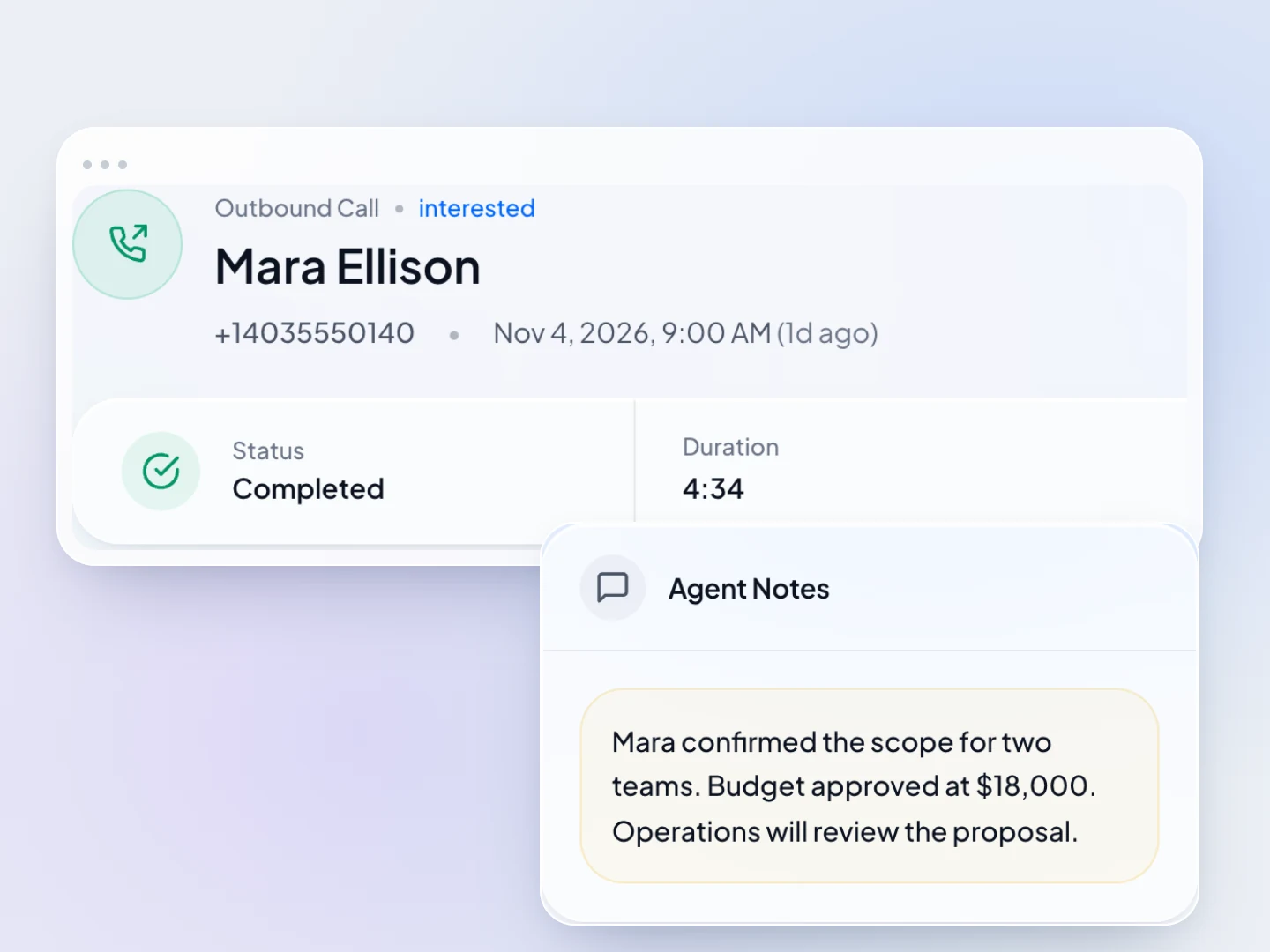
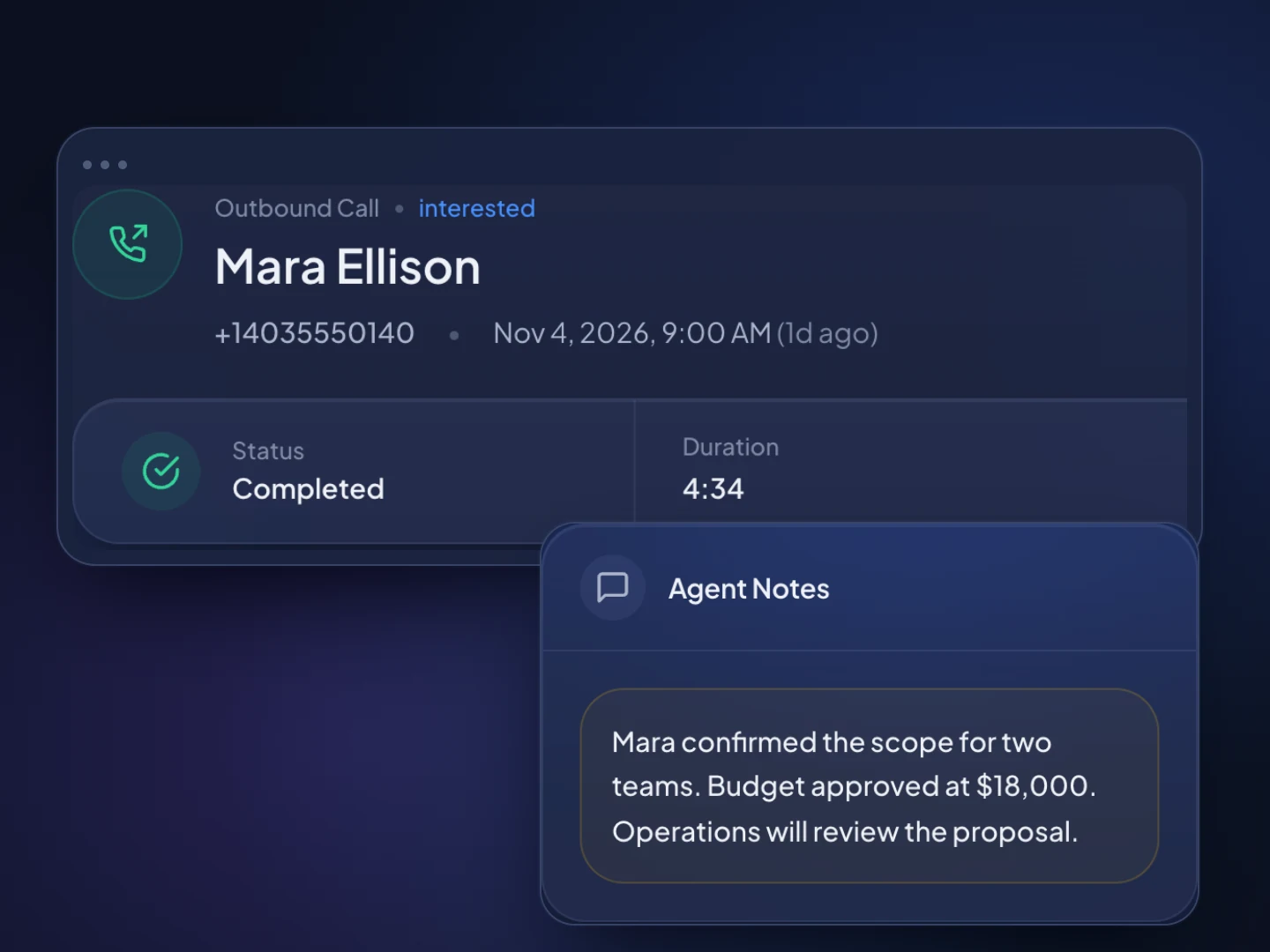
Each call list can have its own call script, shown next to the outcome form with the contact's name and company filled in. Every outcome saves to the contact.
With local presence on, each call shows one of your team's numbers with the lead's area code, or one from their province or state, and the same number on every follow-up.
Managers can listen in, whisper to the rep without the other person hearing, or barge in. An admin sets recording for every call, no calls or each user's choice.
The pipeline
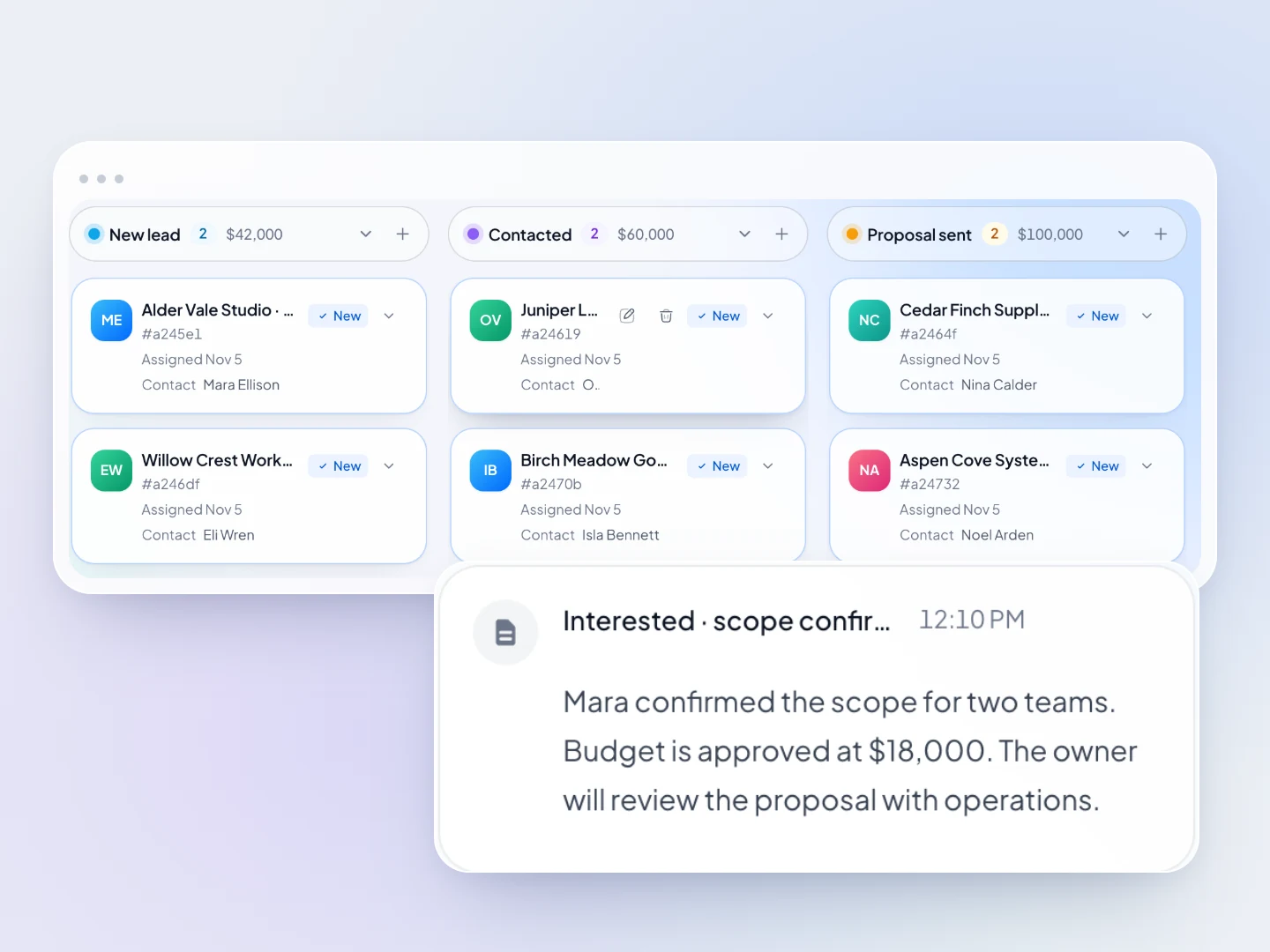
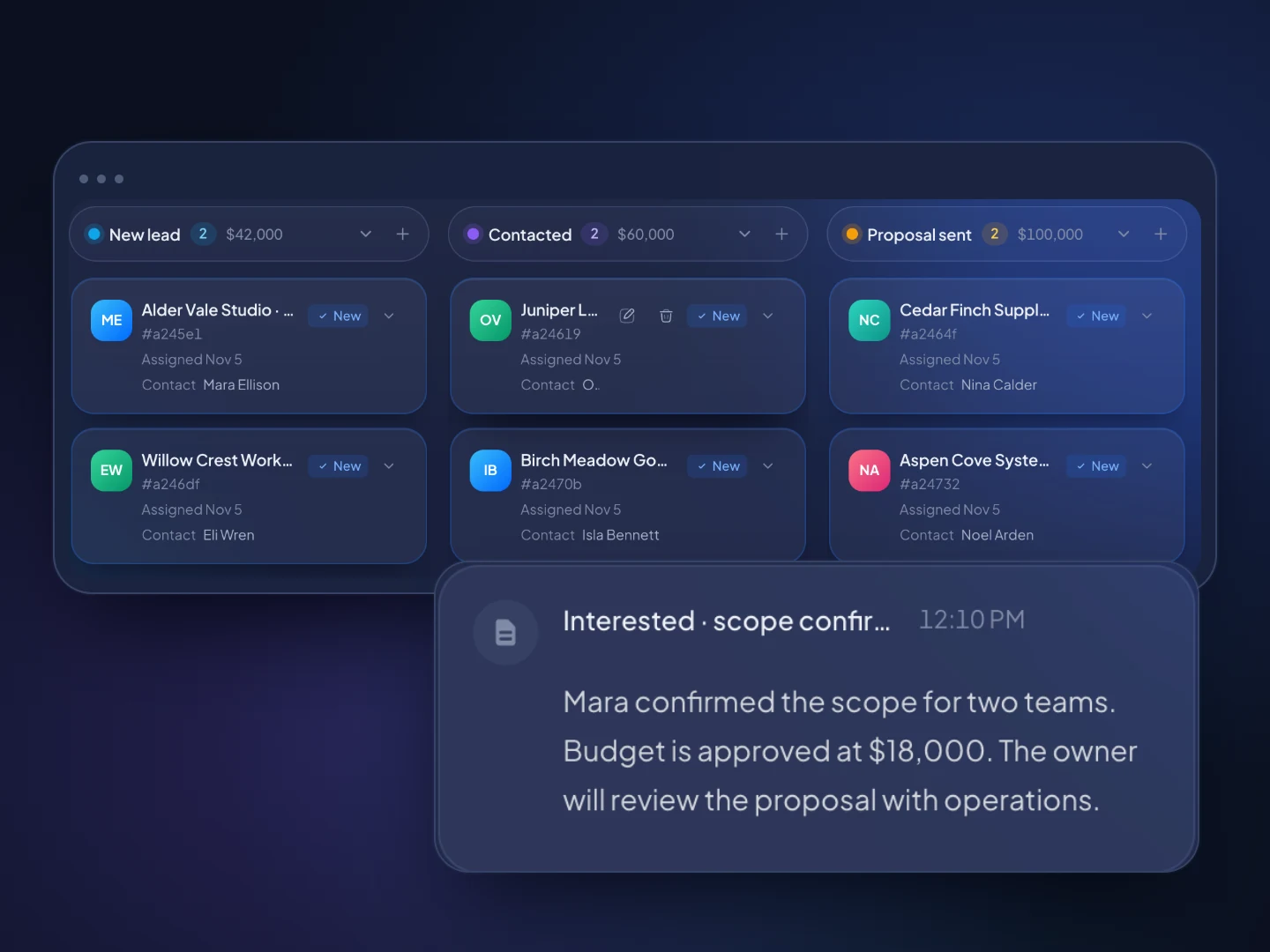
Calls, texts and emails save to the contact's timeline, and each deal sits on a pipeline that shows the value at every stage.
How it works
Export your contacts as a spreadsheet and import it. TopReach finds the phone number in whichever column it's in, and it can find and merge duplicates.
Buy local numbers in the area codes you call, at $10 a month each, or have TopReach move existing numbers over. Turn on local presence so each lead sees a number from their area.
Work a saved or dynamic list in power or parallel mode on the web or your phone. Outcomes save to the contact, and unanswered calls get the follow-up you set.
Guide
Google Voice is often a team's first business line: cheap, simple and already inside Google Workspace. Teams look for an alternative when the line has to do sales work, like calling through a list, following up by text and keeping track of deals. This guide explains what Google Voice is built for, when it's still the right choice, and how the dialers and prices compare. Every statement about Google Voice comes from Google's own pages, checked November 7, 2026.
Google Voice is a business phone service you add to a Google Workspace account, in the Workspace Admin Console. Google says 'Your Voice line works on mobile devices, laptops, and supported desk phones', and calls can be made from Gmail.
Starter, at $10 a user a month, is for up to 10 users in up to 10 domestic locations, with calls to the US, voicemail transcription and Android and iOS apps. Standard, at $20, removes the user cap and adds a multi-level auto attendant, ring groups, desk phone support, SIP Link and eDiscovery. Premier, at $30, adds unlimited international locations and advanced reporting in BigQuery. Every plan lists 'Unlimited text messaging in US'.
Google's Voice page doesn't say whether these prices are monthly or annual, and Workspace is priced separately by region, so we don't quote it here. Google Voice has no CRM and lists no dialer.
Google Voice is the better choice when you need a simple, cheap business line and calls are a small part of the day.
A CRM with a built-in dialer fits better when the business line is how you sell: you call through lists, follow up when people don't answer and need to know where every deal stands.
On Google Voice, each call is dialed by hand, notes live somewhere else, and nothing reminds you to follow up. In TopReach, a rep builds a saved list, or a dynamic list that fills itself from rules, and starts the dialer. The call script shows next to the outcome form, the outcome saves to the contact, and the deal moves along a pipeline.
When a call isn't answered, TopReach can drop a voicemail and then send a text or an email on the days you choose. Managers see conversations and outcomes per rep, with leaderboards, and can listen in, whisper or barge in on live calls.
Google Voice has no dialer, so every call is a tap or a click. TopReach includes two dialer modes in the same phone license.
Power mode calls one number after another, so whoever answers reaches a rep. It suits warm leads, existing customers and callbacks. Parallel mode rings several numbers at once and connects the rep to whoever picks up first. When two people answer at the same moment, one of them gets dropped, so keep parallel mode for large cold lists where most calls go unanswered.
In the US, the Telemarketing Sales Rule limits abandoned calls to 3% of answered calls per campaign, measured over 30 days, and Canada's limit is 5%. A team using parallel mode for telemarketing needs to watch that rate.
In TopReach, yes. The iPhone and Android apps run power and parallel sessions: pick a call list, tap Power or Parallel, and the next lead, the live call and the call script share one screen. Parallel shows when your workspace has it turned on. Calls go out over Wi-Fi or mobile data from your team's business numbers, so your personal number stays private, and incoming business calls ring like any other call.
The Google Voice app is a good business line on your phone: calls, texts, voicemail, spam filtering and forwarding. It has no dialer and no CRM.
Google Voice costs far less, and it's a phone line, not a sales tool. TopReach costs more because it includes a CRM, two dialer modes, local presence, AI summaries and minutes.
TopReach is $55 a seat a month, or $49 billed yearly. Each person who calls also needs a $99-a-month phone license with 3,000 minutes. Phone numbers are $10 a month each.
For one person who calls, TopReach is $164 a month with one number on monthly billing, or $158 with the seat billed yearly. Google Voice Starter is $10 a month for that person, plus Workspace.
For four callers and one manager who doesn't call, TopReach is $711 a month on monthly billing, with five seats, four phone licenses and four numbers, or $681 with the seats billed yearly. Five Google Voice Starter users are $50 a month, or $100 on Standard, plus Workspace and whatever CRM and dialer you add. If your team makes a handful of calls a day, Google Voice is the sensible choice.
Check how your team really uses the line, what you'd give up and where your contacts live. A short list:
Outbound calling and texting are regulated in both the US and Canada, whichever tool you use. This is general information, not legal advice.
Side by side
Google Voice details come from Google's own Voice plans page and App Store listing, checked November 7, 2026. Plans change, so check Google's before you decide.
FAQ

Start a 14-day free trial, import your contacts and run your first call block.
Updated