Guide
How loan officers work the phones: purchase, refinance, past clients and partners
A loan officer's pipeline is built on the phone: a new inquiry called back the same day, a pre-approved buyer kept warm through months of house hunting, a realtor partner who sends the next deal, a past client called when rates fall. This guide covers those calls, the stages and fields that keep them organized, which dialer mode to use and the rules to check first.
What calls does a loan officer make?
Six kinds of calls fill most loan officers' weeks. Each needs its own list and rhythm, so run them as separate call lists rather than one long sheet.
- New inquiries: purchase and refinance leads to call back quickly, qualify and move toward an application.
- Pre-approved buyers: people still house hunting, who need a call every couple of weeks so they come back to you when they find a home.
- In-process borrowers: status calls while the loan moves through processing and underwriting, often shared with a processor.
- Past clients: anniversary and annual review calls, which bring referrals and the next loan.
- Realtor partners: regular calls to the agents who send you buyers.
- Rate-drop campaigns: calls to past clients and old refinance prospects when rates fall enough to matter to them.
What pipeline stages and fields should a mortgage team use?
Use stages that follow the loan: Inquiry, Contacted, Application, Pre-approved, Under contract, In process, Clear to close, Funded and Lost. Refinances skip the shopping stages and go from Application straight to In process.
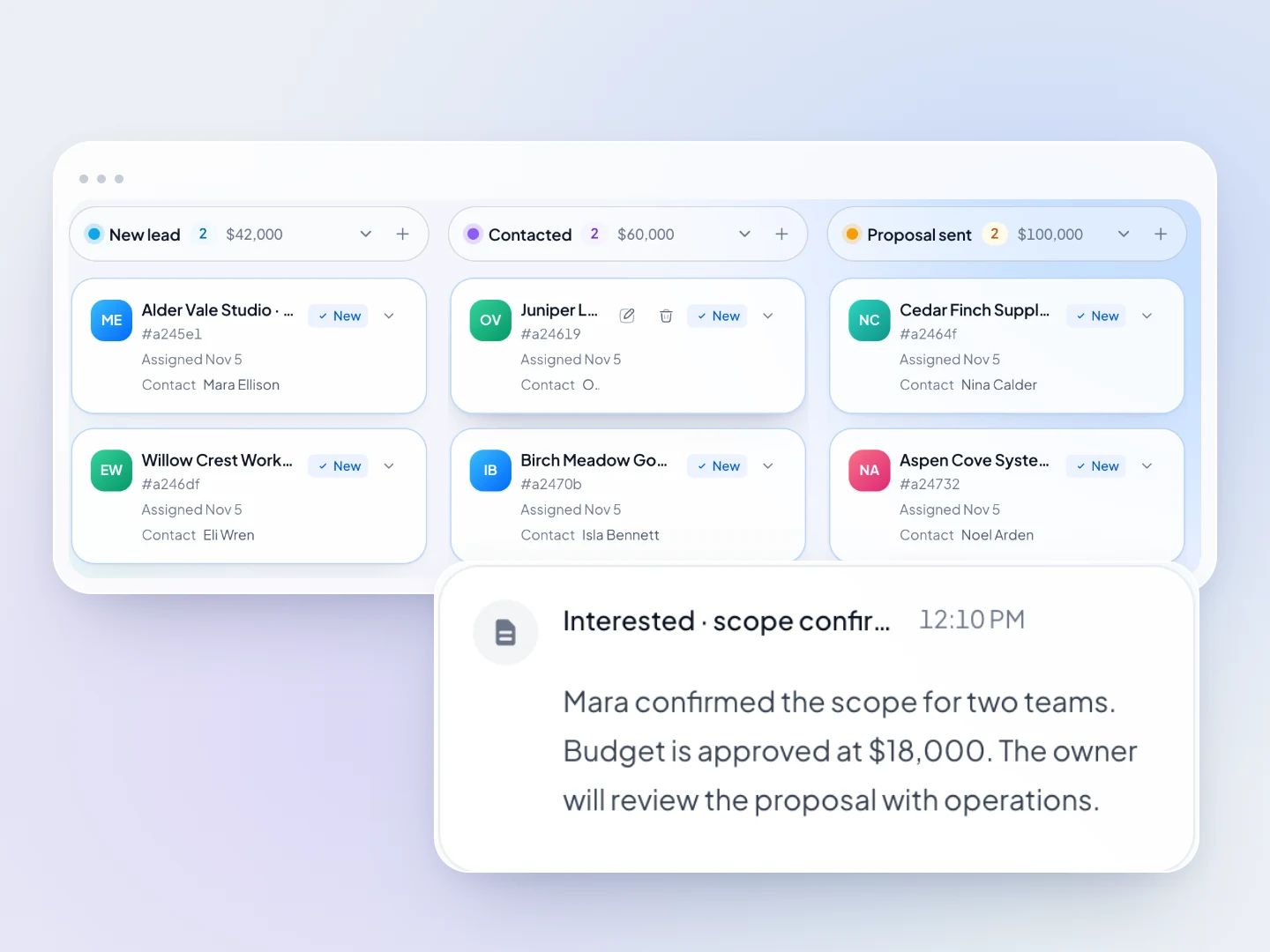
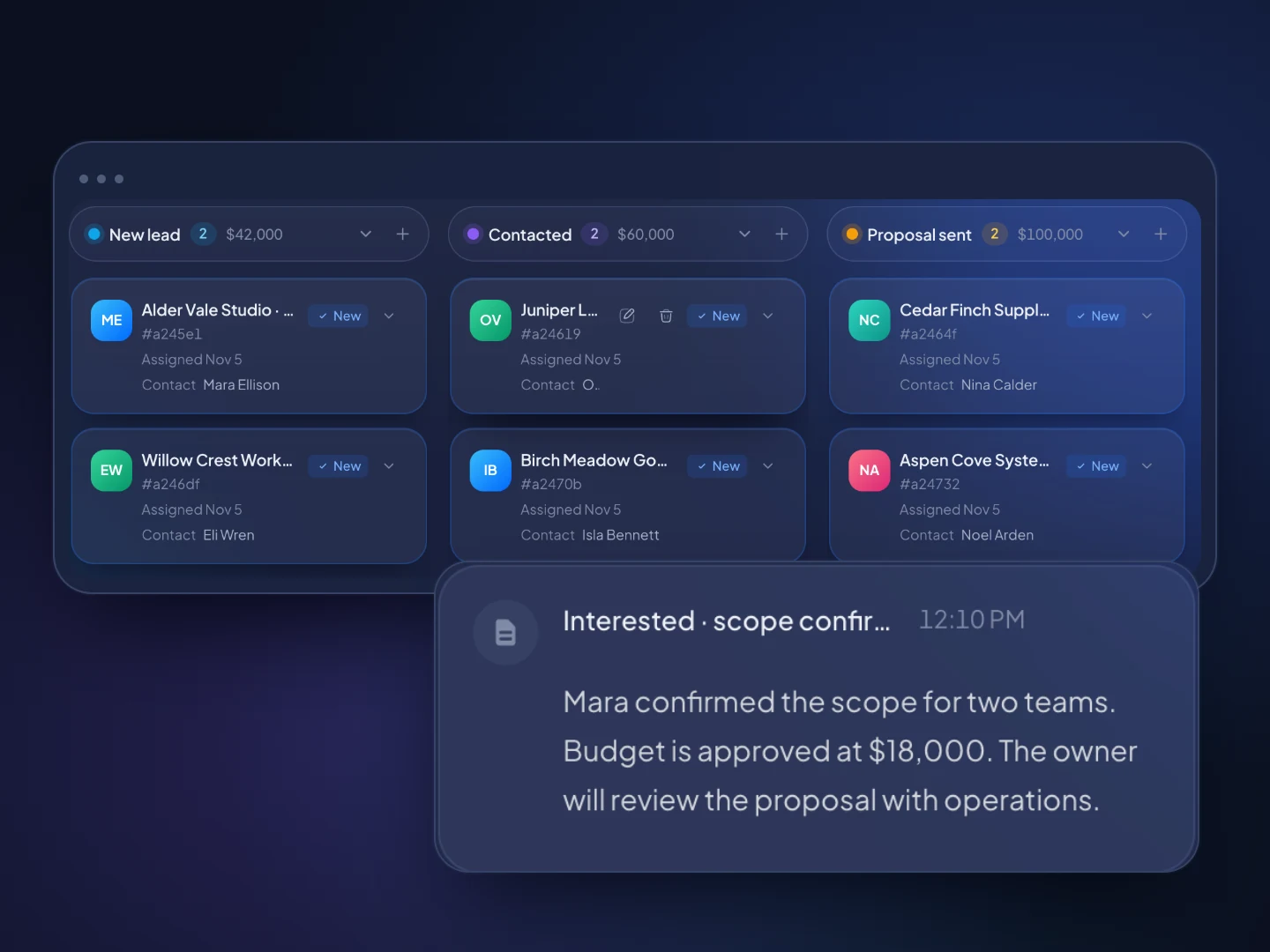
In TopReach, each loan is a deal on a drag-and-drop pipeline, and the pipeline shows the value at each stage. Use the loan amount as the value and the board becomes a volume forecast: how much is pre-approved, how much is under contract and how much is set to fund. Tag deals Purchase or Refinance to tell them apart.
Custom fields and tags hold what you need before a call. Keep borrower documents, credit reports and Social Security numbers in your loan origination system, since TopReach isn't a document store.
- Loan purpose and type: purchase or refinance; conventional, FHA, VA, USDA or jumbo
- Loan amount, rate and funded date, which drive anniversary calls and rate-drop lists
- Pre-approval expiration date, so you update it before the buyer finds a home
- Referring agent and lead source, so you can see which partners send business
- Property state, since you can only originate where you're licensed
- Tags such as Past client, Realtor partner, First-time buyer and a rate band like Rate 7%+
How should you follow up with purchase and refinance prospects?
Call new inquiries the same day, then follow a set schedule. Someone who filled in a form is often talking to more than one lender, and the loan officer who reaches them first and answers their questions clearly has the advantage.
When a call isn't answered, TopReach can drop a voicemail you recorded once, then send a text or an email on the days you choose, and it tracks every touch so nobody gets the same message twice. Each call, text and email lands on the borrower's timeline, so a processor or assistant can see what's already been said.
- New inquiry: call as soon as you can, then several more times over the next week, with a voicemail and text on the misses. After five or six attempts, move them to a later list.
- Pre-approved buyer: call every two to three weeks while they shop. Ask what they've seen and whether the price range has changed.
- Pre-approval expiring: call a week or two before the expiration date to refresh documents.
- Refinance prospect who isn't ready: record the rate that would make it worthwhile and tag them for the next rate-drop campaign.
- Under contract: short status calls to the buyer and their agent at each milestone, so neither has to chase you.
How do you stay in touch with past clients and realtor partners?
Call both on a steady schedule. Past clients and realtor partners are where repeat and referral business comes from, and both respond better to regular, useful contact than to an occasional burst.
Call past clients on the anniversary of their closing and once a year for a mortgage review: has anything changed, are they thinking of moving, do they know anyone buying? Set a reminder task when the loan funds, and use a dynamic list built from the Past client tag for the annual calls.
Rank realtor partners by how much they send you. Call your best partners every week or two and the rest monthly, and bring something useful each time, such as a program change or an update on a shared buyer, shared only with the borrower's permission. Keep each brokerage as a company with its agents as contacts, and record the referring agent on every loan.
Be careful with gifts and favors. RESPA Section 8 prohibits giving a referral partner anything of value in return for referrals, so check co-marketing and gifts with counsel.
How do you run a rate-drop campaign?
A rate-drop campaign is a burst of calls to past clients and old refinance prospects when rates fall far enough that refinancing would help them. The list is ready before rates move if you've recorded each person's rate.
TopReach doesn't watch rates or price loans. You decide when a drop is worth calling about, and the CRM gets the calls made and tracked.
- Build the list from rate-band tags, so the people with the most to gain are called first.
- Power-dial past clients first in focused blocks, then older refinance inquiries.
- On a miss, let the voicemail drop and follow with a text or email inviting a call back.
- Move anyone interested onto the pipeline, and tag the rest with the rate that would change their mind.
- Have compliance approve any text or voicemail that mentions a rate or payment before the campaign starts.
Should loan officers use a power dialer or a parallel dialer?
Use power mode for borrowers, past clients and realtor partners. Power dialing calls one number after another, so whoever answers reaches a loan officer, and the next call starts as soon as the last one ends.
Parallel mode calls several numbers at once and connects the loan officer to whoever picks up. It can help on a large list of old inquiries where most calls go unanswered. When two people answer at once, one gets dropped, which is acceptable on a cold list and wrong for a past client or a partner's buyer. Dropped calls also count toward the federal abandoned-call limit.
Both modes come with the same $99-a-month phone licence, so you can pick the mode list by list.
What rules apply to mortgage calls and texts?
Mortgage outreach falls under telemarketing law plus mortgage licensing and advertising rules. Licensing and advertising questions are your counsel's job, so check with them or your compliance team before you start. This is a general overview, not legal advice.
TopReach keeps a do-not-call list and handles texting opt-outs across your team. It doesn't review your wording or decide who you may call.
- Consent: under the TCPA, autodialed or prerecorded calls and texts to cell phones generally need prior express consent, and written consent for sales calls. A dropped voicemail is a prerecorded message. If you buy leads, ask how consent was collected.
- Do Not Call: sales calls to numbers on the National Do Not Call Registry generally need written permission or an established business relationship. An inquiry generally counts for three months and a transaction for 18, so older past clients may need scrubbing before a refinance call.
- Hours and abandoned calls: federal rules limit sales calls to 8 a.m. to 9 p.m. in the borrower's time zone and cap abandoned calls at 3% of answered calls per campaign over 30 days. Some states, such as Florida and Oklahoma, are stricter.
- Call recording: some states require everyone on the call to agree before it's recorded.
- Licensing: loan officers are licensed or registered through the NMLS under the SAFE Act, and state rules cover where you can originate and when to show your NMLS ID.
- Advertising: a text, email or voicemail that mentions a rate or payment can be an advertisement under Regulation Z and the Mortgage Acts and Practices (MAP) rule, with disclosure requirements and limits on misleading claims.
- Canada: the National Do Not Call List rules and CASL apply, and provincial regulators set licensing and conduct rules for mortgage brokers and agents.