Power dialing for call time
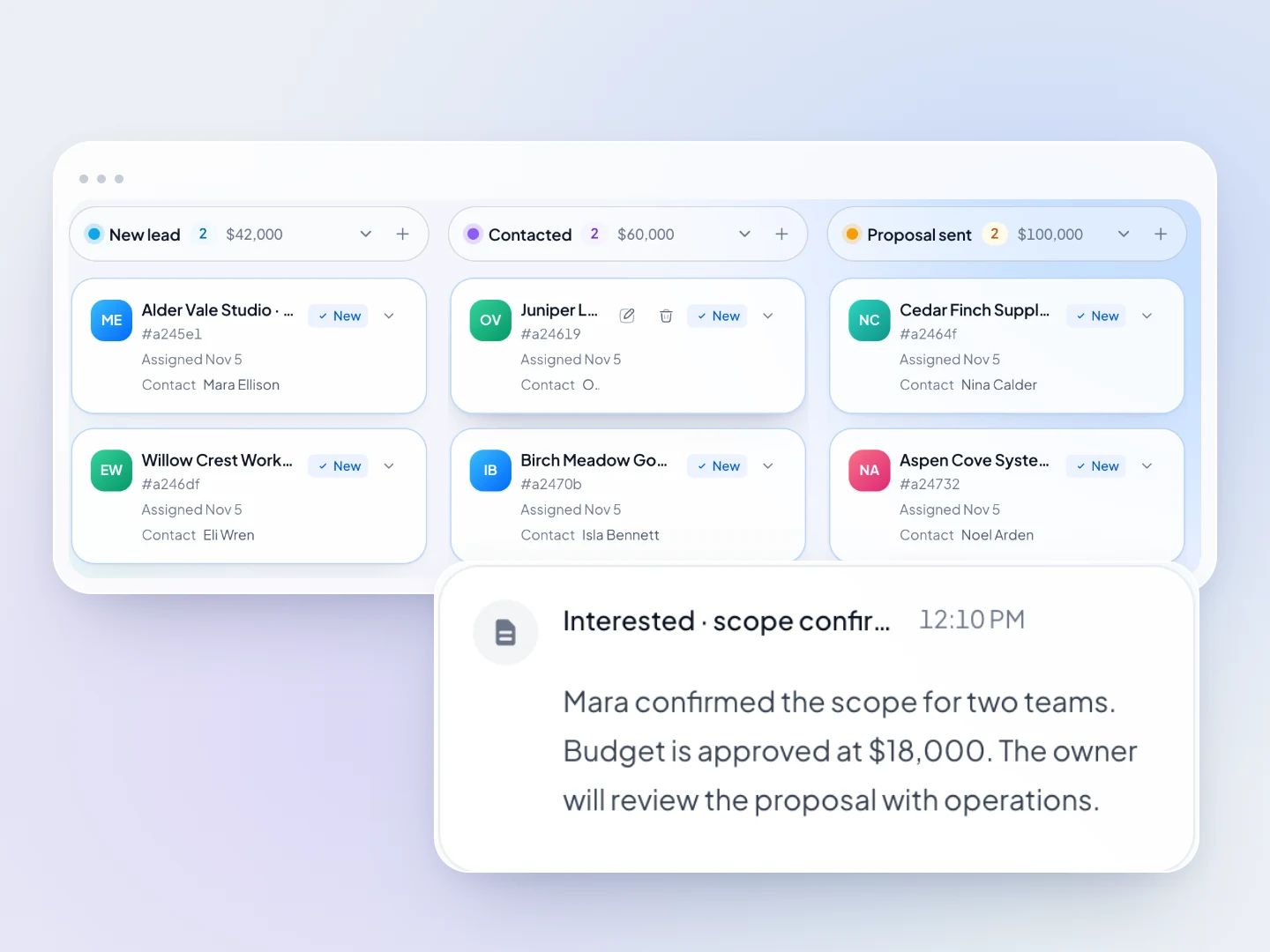
Power mode calls one donor after another, so a donor who answers reaches the candidate or caller, not a dropped line.
CallHub alternative
CallHub is an outreach platform for political campaigns, unions, nonprofits and advocacy groups, with phone banking, peer-to-peer texting and integrations with tools like NGP VAN. TopReach is a CRM with a power dialer, built for a smaller job: a finance team calling donors and tracking every pledge until the money arrives. If you're running a volunteer phone bank or P2P texting at scale, CallHub is the better fit.
What TopReach is built for
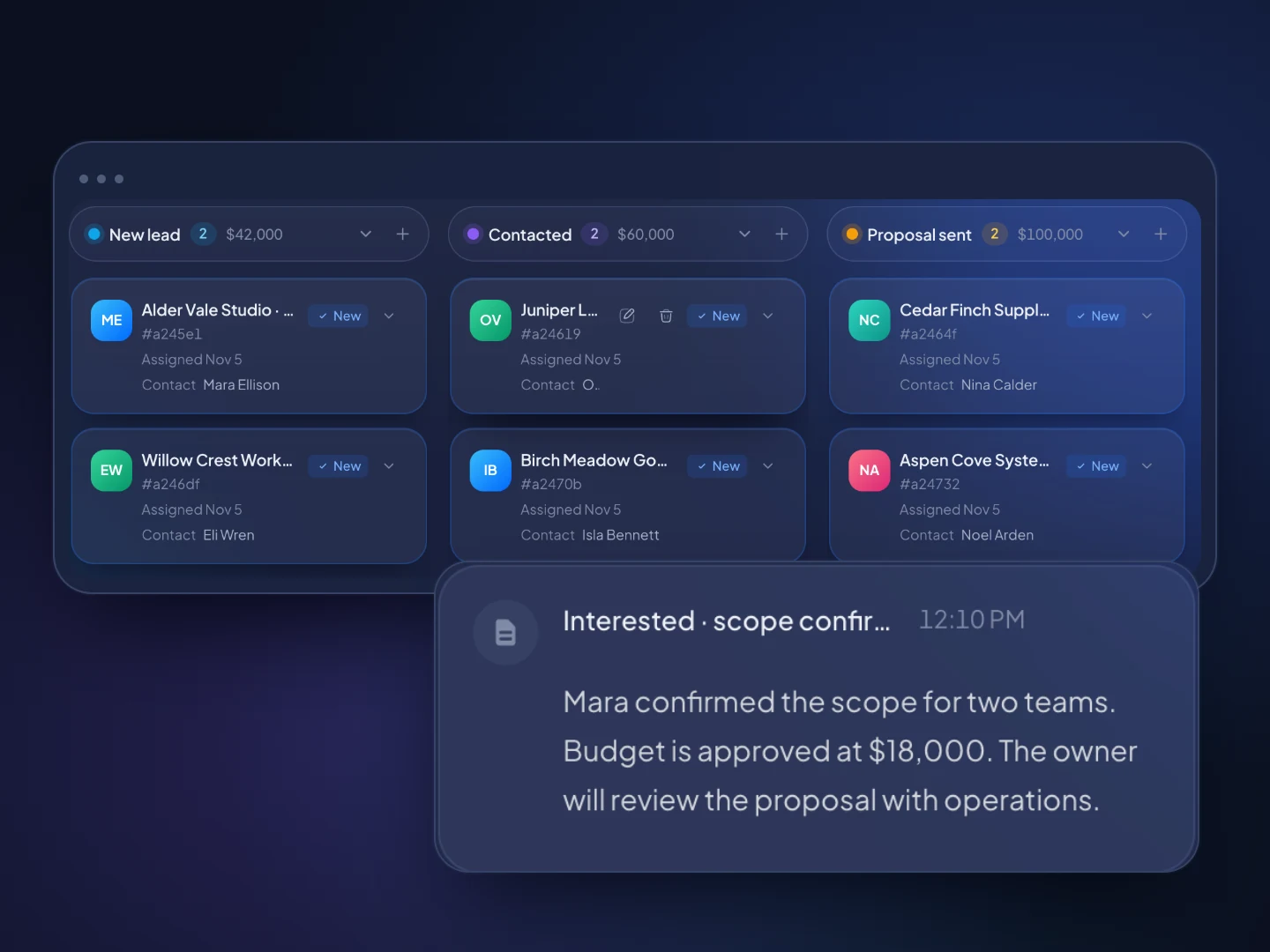
Power mode calls one donor after another, so a donor who answers reaches the candidate or caller, not a dropped line.
Each pledge sits on a deals pipeline with stages such as Pledged, Link sent and Received. The pipeline shows the value at every stage.
When a donor doesn't answer, TopReach can drop a voicemail, then send a text or an email on the days you choose, tracking every touch.
A call time manager can listen in, whisper to the caller without the donor hearing, or barge in. Recording follows the workspace setting.
Import donors from a spreadsheet, keep ask amounts and giving history in custom fields and tags, and build saved or dynamic lists for each session.
TopReach keeps a do-not-call list and handles texting opt-outs for the workspace, so a donor's request isn't lost between callers.
Call time
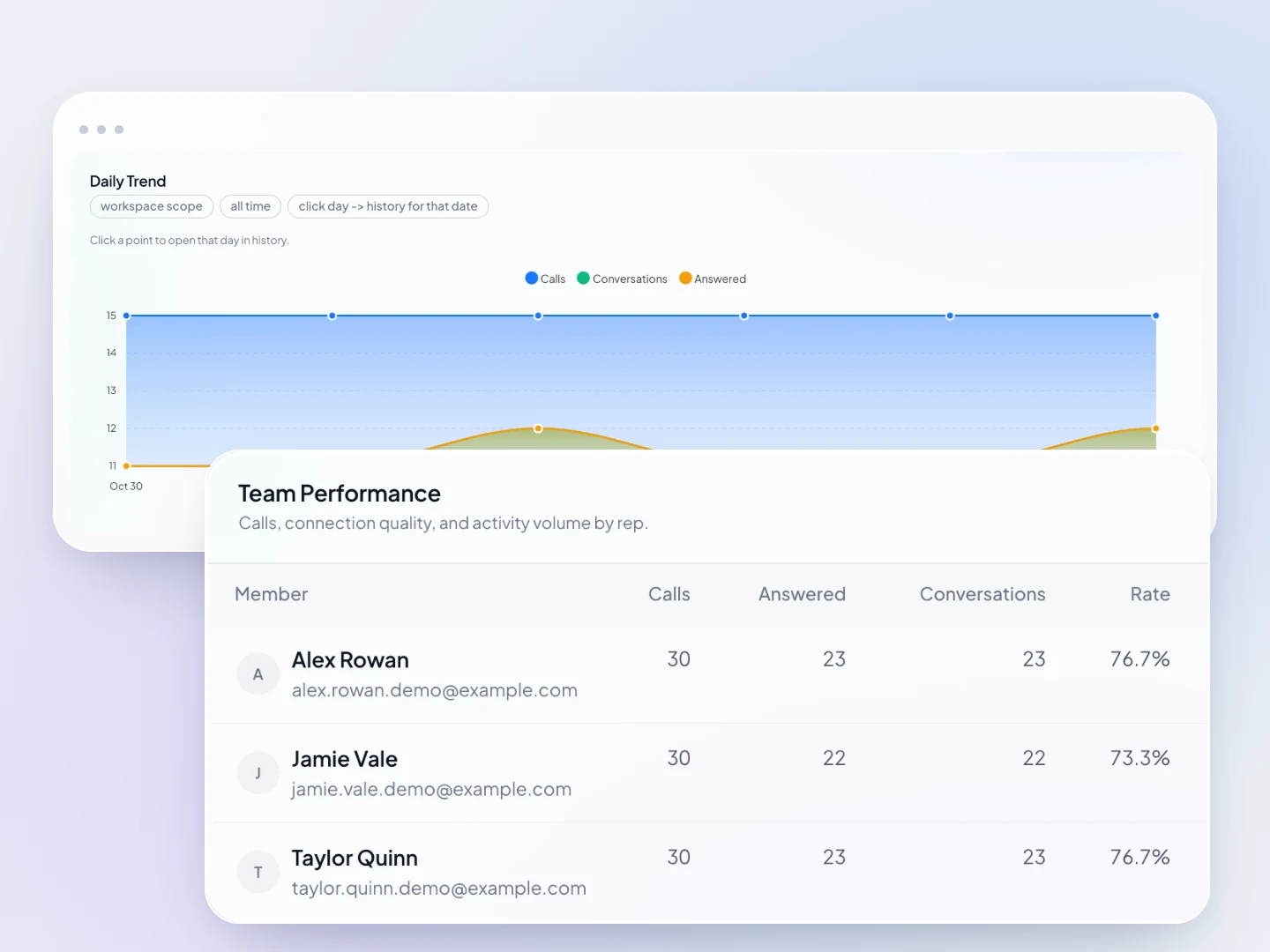
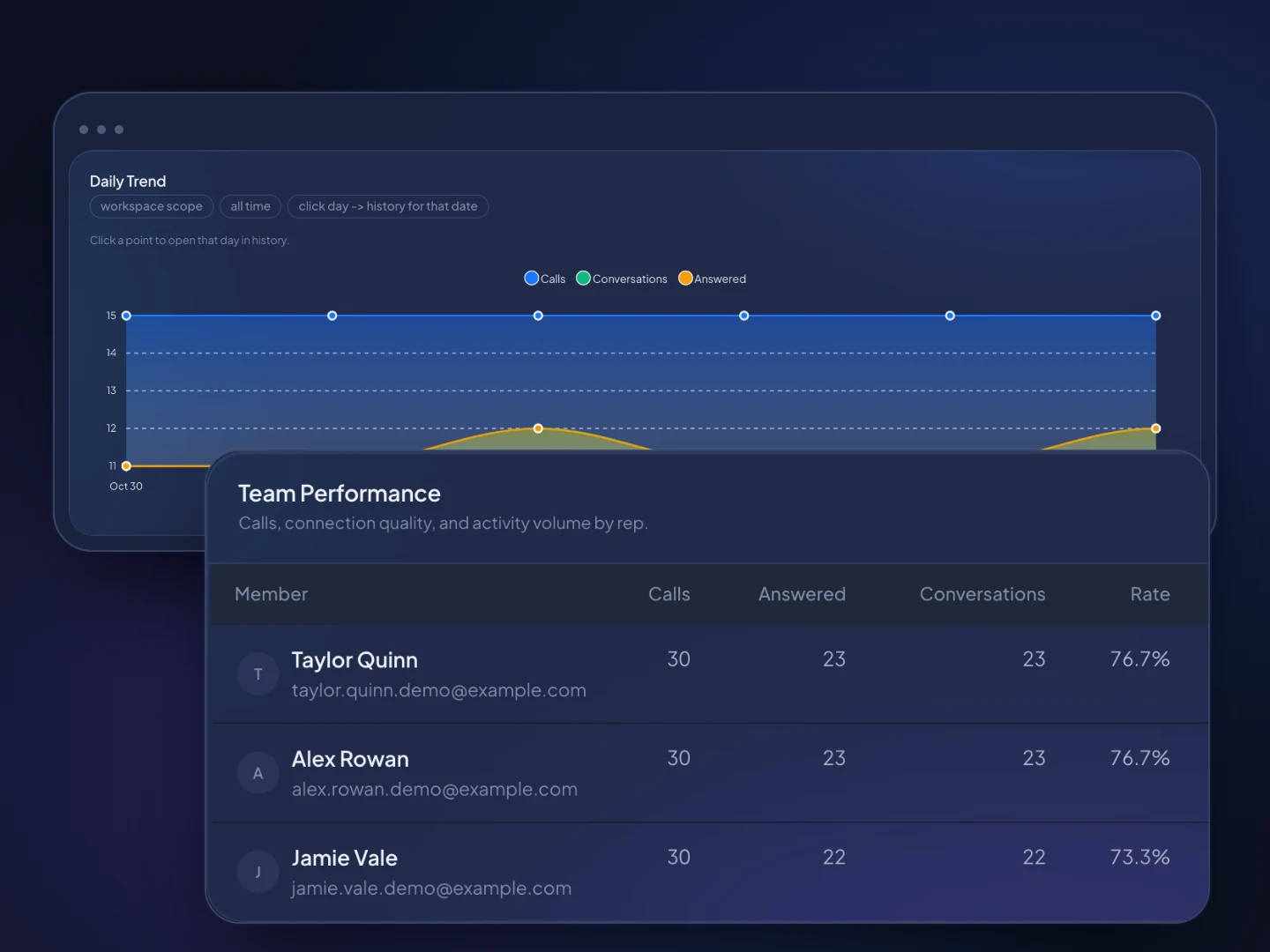
Listen in live, whisper or barge in, and compare conversations and outcomes per caller after the session.
How it works
Export the donors you plan to call as a spreadsheet and import it. TopReach finds the phone number in whichever column it's in, and custom fields hold giving history, ask amounts, employer and occupation.
Make a saved list for each session, or a dynamic list that fills itself from rules. The candidate or caller works through it in power mode.
Log each pledge on the pipeline, let follow-up send the reminders and move the pledge to Received when the contribution shows up in your records.
Guide
CallHub and TopReach both help campaigns and nonprofits reach people by phone and text, but they're built for different jobs. CallHub runs outreach at volume: phone banks, peer-to-peer texting and broadcasts, often staffed by volunteers. TopReach is a CRM with a power dialer for the finance side: a candidate's call time, a development team's donor calls and the pledges that follow. This guide explains where each fits and how to choose.
CallHub is a unified outreach platform for political campaigns, unions, nonprofits and advocacy groups. It combines calling, texting and email, and its site organizes use cases around get-out-the-vote, persuasion, fundraising, union organizing and member mobilization.
On the calling side, CallHub runs live-agent call center campaigns and voice broadcasts. Its auto dialer page lists four modes: a power dialer that places calls one at a time when agents are ready, an auto dialer with a set ratio such as 2:1 or 3:1, a predictive dialer that paces calls by agent availability and answer rates, and a FastClick dialer built on human-initiated dialing. Volunteers can join from a browser or CallHub's mobile app, and supervisors can join live calls.
On the texting side, CallHub offers peer-to-peer texting, where the first message goes out as a broadcast and agents or volunteers handle each reply, plus text broadcasts, text-to-join and text-to-donate. It lists two-way sync with NGP VAN, NationBuilder, Action Network, PDI, Salesforce, EveryAction and Blackbaud.
CallHub is the better choice for outreach to a large list with many callers or texters, which is most field and volunteer work. TopReach isn't built for that.
TopReach fits better when a small team calls donors it already knows and needs to track each pledge until the money arrives. That's usually a candidate with a call time manager, a finance director and a few staff, or a nonprofit development team.
The candidate or caller works a list in power mode, so the next call starts when the last one ends and a donor who answers reaches a person. Each pledge goes on a deals pipeline with stages such as Pledged, Link sent, Reminded and Received, and the pipeline shows the dollar value at each stage. When a donor doesn't pick up, TopReach can drop a voicemail and then send a text or an email on the days you choose. The call time manager can listen in, whisper or barge in.
Donor details live in custom fields and tags: past giving, ask amount, employer, occupation and who knows the donor. Our political campaigns page has a full guide to running call time, and our nonprofits page covers thank-you calls, lapsed donors and phonathons.
Results show up per caller. TopReach reports conversations and outcomes for each caller, with leaderboards, and the pipeline gives pledged and outstanding dollars by stage. That's usually what a finance director reviews with the candidate each week.
Use power mode for candidate call time and for any donor you know. It calls one number at a time, so whoever answers reaches a caller. CallHub's power dialer works the same way, placing calls one at a time when agents are ready.
Dialers that call several numbers at once, such as TopReach's parallel mode or CallHub's auto and predictive modes, can produce more conversations per hour on a big cold list. The cost is dropped calls: in TopReach's parallel mode, when two people answer, one gets dropped. A major donor who picks up to silence is a bad outcome, so keep multi-number dialing for large lists where that risk is acceptable and where your counsel is comfortable with the dialing method.
You can, as long as you accept that they won't share data automatically. TopReach has no CallHub integration, so moving contacts between them means exporting and importing spreadsheets.
One way to split the work: field and volunteer outreach, P2P texting and voter file sync stay in CallHub, while the finance team runs call time, major donor calls and pledge follow-up in TopReach. Import the donors you plan to call from a spreadsheet; TopReach finds the phone number in whichever column your file uses and can find and merge duplicates.
The two price on different models: CallHub charges per dial and per text, and TopReach charges per seat and per caller.
CallHub's Essential plan is pay as you go, listed at $0.045 per dial, $0.019 per SMS segment, $0.048 per MMS message and $0.046 per minute of voice broadcast, with $6 in free credits, up to 10 agents and up to 10,000 contacts, on their US pricing page (checked November 2026). Scale has custom volume rates, unlimited agents and contacts and a $2,500 minimum commitment.
TopReach is $55 a seat a month, or $49 billed yearly. Each person who calls also needs a $99-a-month phone licence with 3,000 minutes, and numbers are $10 a month each. A candidate and a finance director who both call, each with a number, cost $328 a month on monthly billing.
That flat price suits a small team that calls every day. It doesn't suit a volunteer phone bank: twenty volunteers would need twenty seats and twenty phone licences, over $3,000 a month before numbers. For that kind of program, per-dial pricing with no seat fee will usually cost far less.
Campaign and charity calls get some exemptions, but not from every rule, and the details depend on where you and your donors are. This is general information, not legal advice.
Side by side
CallHub details come from CallHub's own website and pricing page, checked November 2026. Plans change, so check theirs before you decide.
FAQ

Start a 14-day free trial, import your donor list and put your callers on the power dialer.