Guide
How residential solar teams run setting, closing and follow-up by phone
Residential solar is sold through a long chain of conversations: the knock or the web form, the setter's call, the appointment, the proposal and often weeks of follow-up. This guide covers how setters and closers work the phones, how to follow up on door knocks and quotes, what to put in the pipeline and custom fields, which dialer mode to use and why solar teams need to take the calling rules more seriously than most.
How does a residential solar sales team work the phones?
Most residential solar teams split the work between setters, who find and qualify homeowners and book appointments, and closers, who run the consultation and present the proposal. After the contract is signed, an operations team takes over the site survey, design, permits, install and utility approval.
The phone connects every step. Setters call new leads and homeowners they met at the door. Someone confirms each appointment. Closers chase open proposals. After signing, someone books the site survey and keeps the homeowner informed through an install timeline that can run for weeks or months, because a customer who hears nothing starts to doubt the decision.
TopReach doesn't supply leads. Whatever the source, you import homeowners from a spreadsheet, and the import finds the phone number in whichever column the file uses.
- Door knocking, where a setter gets a name, a number and permission to follow up
- Web forms and bought leads, which need a fast call and a clear consent record
- Referrals from past customers, events and home shows
How should setters qualify a homeowner and book the appointment?
A setter's job is to make sure the appointment is worth a closer's time, then make sure it happens. Qualify on a few facts, book a firm time with every decision-maker present, and confirm it.
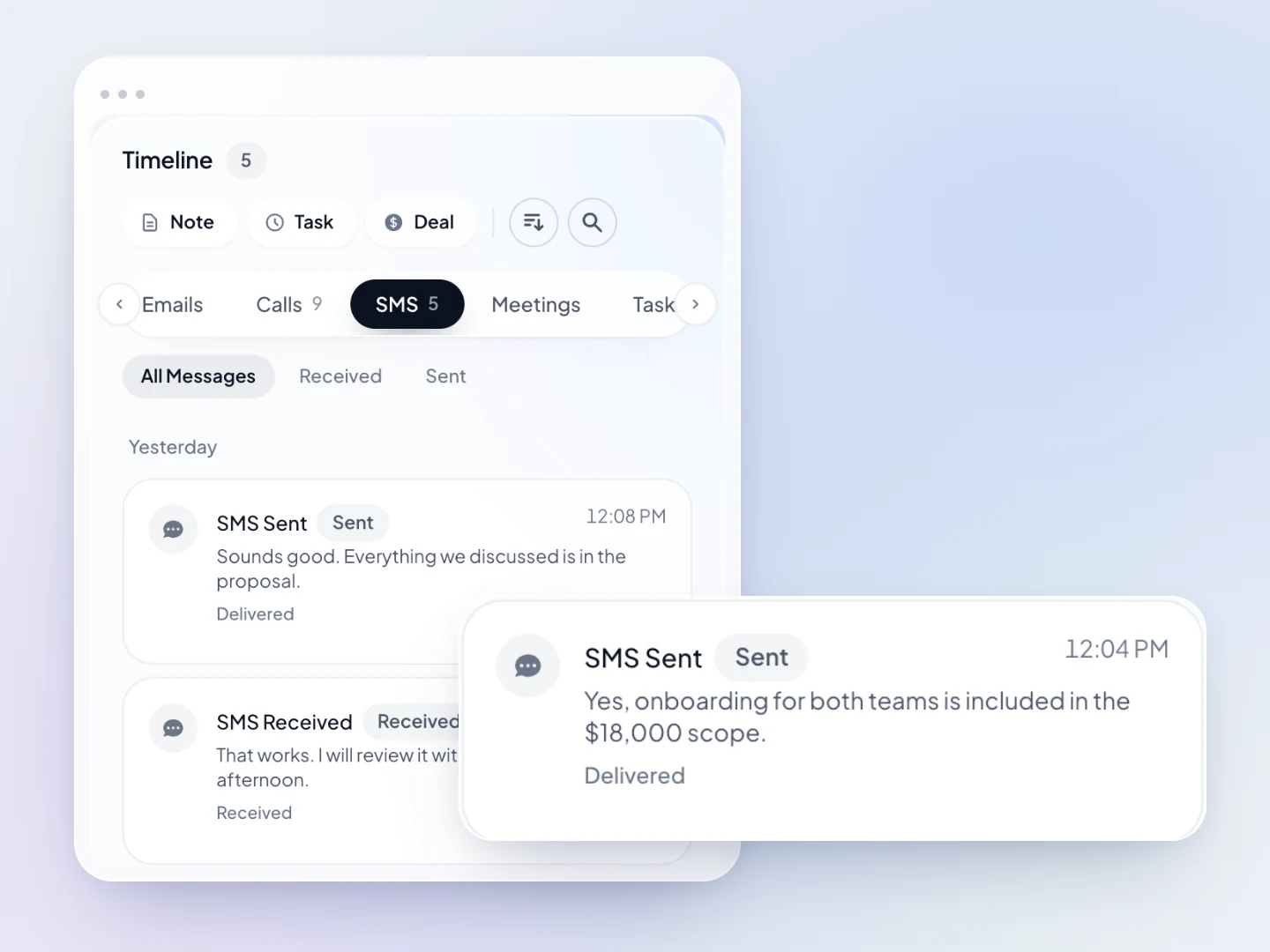
Put each answer in a custom field so the closer sees it on the homeowner's record, and move the deal to Appointment set. Confirm the day before and the morning of, by text if the homeowner has agreed to texts. Replies land in a shared inbox, so whoever is on shift can reschedule instead of letting a closer drive to an empty house.
- Owns the home
- Roof age and condition, and whether trees shade it
- Average monthly electric bill and the utility
- How they'd like to pay: cash, loan, lease or power purchase agreement
- Who else needs to be there, such as a spouse or co-owner
- A specific date and time, in the home or by video
How do you follow up on door-knock leads?
Call door-knock leads the same day, while the conversation at the door is fresh. The setter should log the contact before leaving the street: name, number, what was said, the bill if they shared it and when to call.
At the door, ask for permission to call and text, and note how and when you got it. A number given at the door is not written consent for autodialed or prerecorded marketing calls or texts. If your team uses either, collect written consent the way your counsel recommends and keep the record. Store the consent date and source in custom fields so anyone can check before calling.
Call from a local number, so the homeowner sees a familiar area code, and use tags to sort knock outcomes into call lists:
- Interested: call today and try to book
- Come back: a dated callback with the reason, such as 'spouse home after 6'
- Not a fit: renter, roof needs replacing first or heavy shade
- Do not contact: straight onto the do-not-call list
How do you follow up on a solar proposal?
Follow up on every proposal on a schedule, with a reason for each call. Many homeowners don't sign at the first consultation: they compare quotes, talk to a spouse, check financing or wait for the next bill.
Tag the objection, such as comparing quotes, spouse, financing or roof, so the next call addresses it. When a homeowner goes quiet, TopReach can drop a voicemail, then send a text or an email on the days you choose, and it tracks every touch so nobody gets the same message twice. Use it only for homeowners who've given the consent those messages need.
When a deal is lost, record why. A run of 'went with a cheaper quote' or 'roof first' says more about your leads and pricing than any single call.
- Same day: a text thanking them, with the system size and payment you discussed
- Day 2: a call to answer questions that came up after you left
- Day 5: a call or text with something new, such as a revised layout or another financing option
- Day 10 to 14: a call asking directly whether they're moving forward and what's holding them back
- After that: monthly, or when their next high bill arrives
What pipeline stages and fields should a solar team use?
Use stages that match how a solar sale moves: New lead, Contacted, Appointment set, Appointment held, Proposal sent, Signed, Site survey booked, Canceled and Lost. Put the system price in the deal value, and the pipeline shows the value at each stage, so a manager can see what's out in proposals and what's signed.
Signed isn't the finish line. The FTC's Cooling-Off Rule gives buyers three business days to cancel many sales made in their home, and some states give longer windows for solar contracts. Book the site survey quickly, confirm it by text and keep the homeowner informed. Track what happens next, such as permits and the install date, as a project; TopReach has projects for work after the sale.
Custom fields worth adding:
- Average monthly bill, utility and rate plan
- Roof age, material and shade notes
- Payment preference and financing status
- System size in kW and proposal price
- Setter and closer, so you can see who set and who closed each deal
- Lead source, plus the date and source of consent to call and text
- Appointment date and site survey date
Should solar teams use a power dialer or a parallel dialer?
Use power mode for fresh leads, door-knock follow-up, appointment confirmations and proposals. It calls one number after another, so a homeowner who answers reaches a setter or closer, and the call screen shows the homeowner and your last note.
Parallel dialing calls several numbers at once and connects the rep to whoever picks up. It can produce more conversations per hour on a large list where most calls go unanswered, such as aged web leads. When two homeowners answer at once, one gets dropped. That's acceptable on a big cold list and wrong for anyone with an appointment, a proposal or a signed contract. A dropped call also counts as abandoned under the Telemarketing Sales Rule, which caps abandoned calls at 3% of answered calls per campaign over 30 days. Use parallel mode only on lists with documented consent, and only where your counsel is comfortable with the dialing method.
Both modes come with the same $99-a-month phone licence. Managers can listen in live on a new setter's calls, review recordings and compare conversations and outcomes per rep on leaderboards.
What TCPA and do-not-call rules apply to solar calls and texts?
Solar telemarketing draws a lot of TCPA lawsuits and regulator attention, so build compliance into the process from the start. This is a general overview, not legal advice; check with your counsel before you start calling.
- Consent: under the TCPA, marketing calls and texts to cell phones made with an autodialer or a prerecorded voice generally need prior express written consent, a signed agreement (electronic signatures count) that authorizes your company to contact that number. A dropped voicemail is a prerecorded message.
- Bought leads: consent a homeowner gave on a lead generator's form may not cover calls from your company. Get the consent record for each lead from the vendor and keep it.
- National Do Not Call Registry: don't make sales calls to registered numbers without an established business relationship, such as an inquiry in the past 3 months, or written permission. Use registry data no more than 31 days old and keep your own do-not-call list. TopReach keeps that list and handles texting opt-outs across every rep.
- State laws: federal rules allow sales calls from 8 a.m. to 9 p.m. local time. Florida, for example, limits sales calls to 8 a.m. to 8 p.m. and to three calls in 24 hours on the same subject, and several states require telemarketers to register.
- Call recording: some states require everyone on a call to agree before it is recorded.
- Canada: the National Do Not Call List and CRTC telemarketing rules cover calls, and CASL covers texts and emails.