The CRM is built in
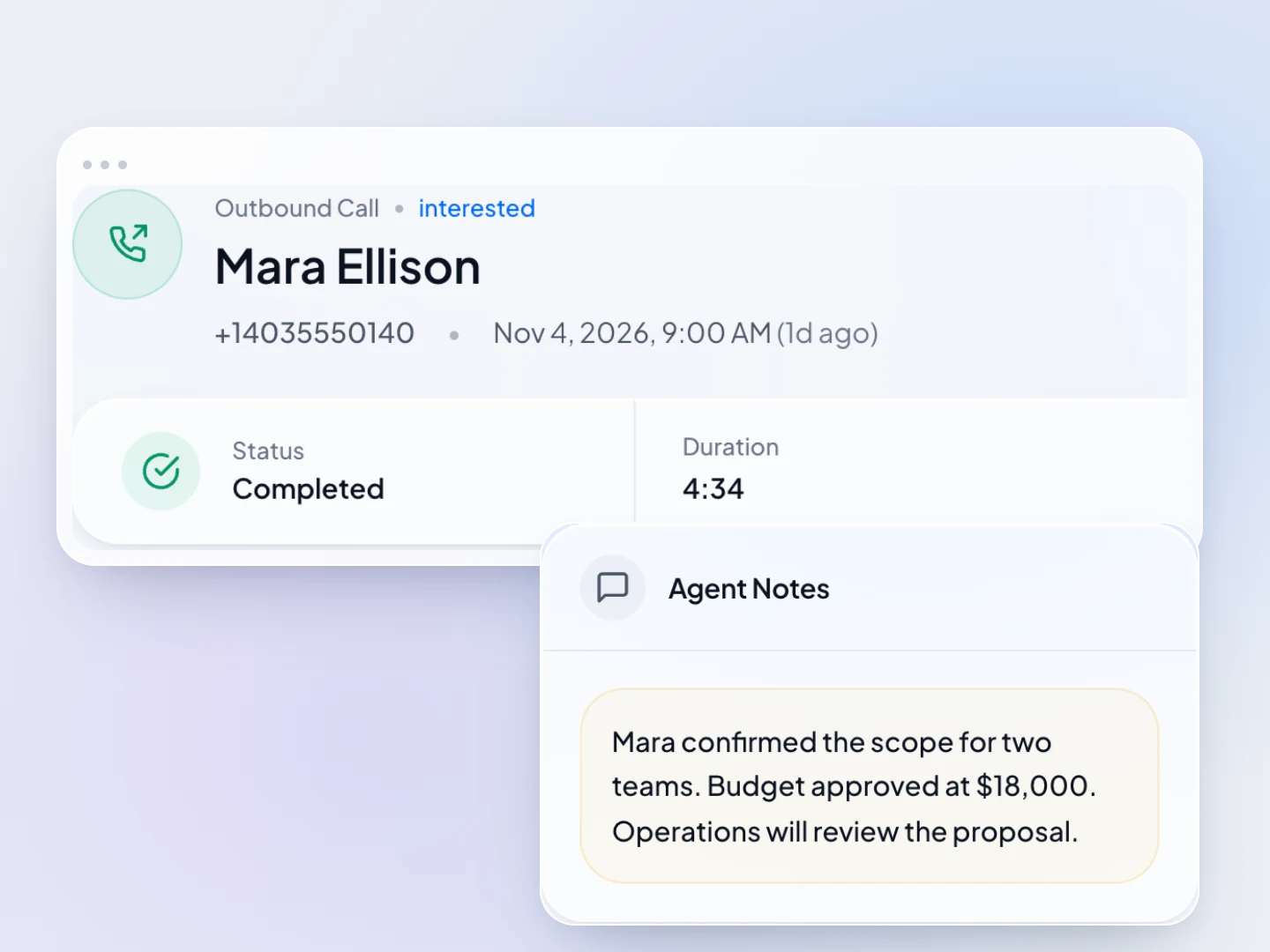
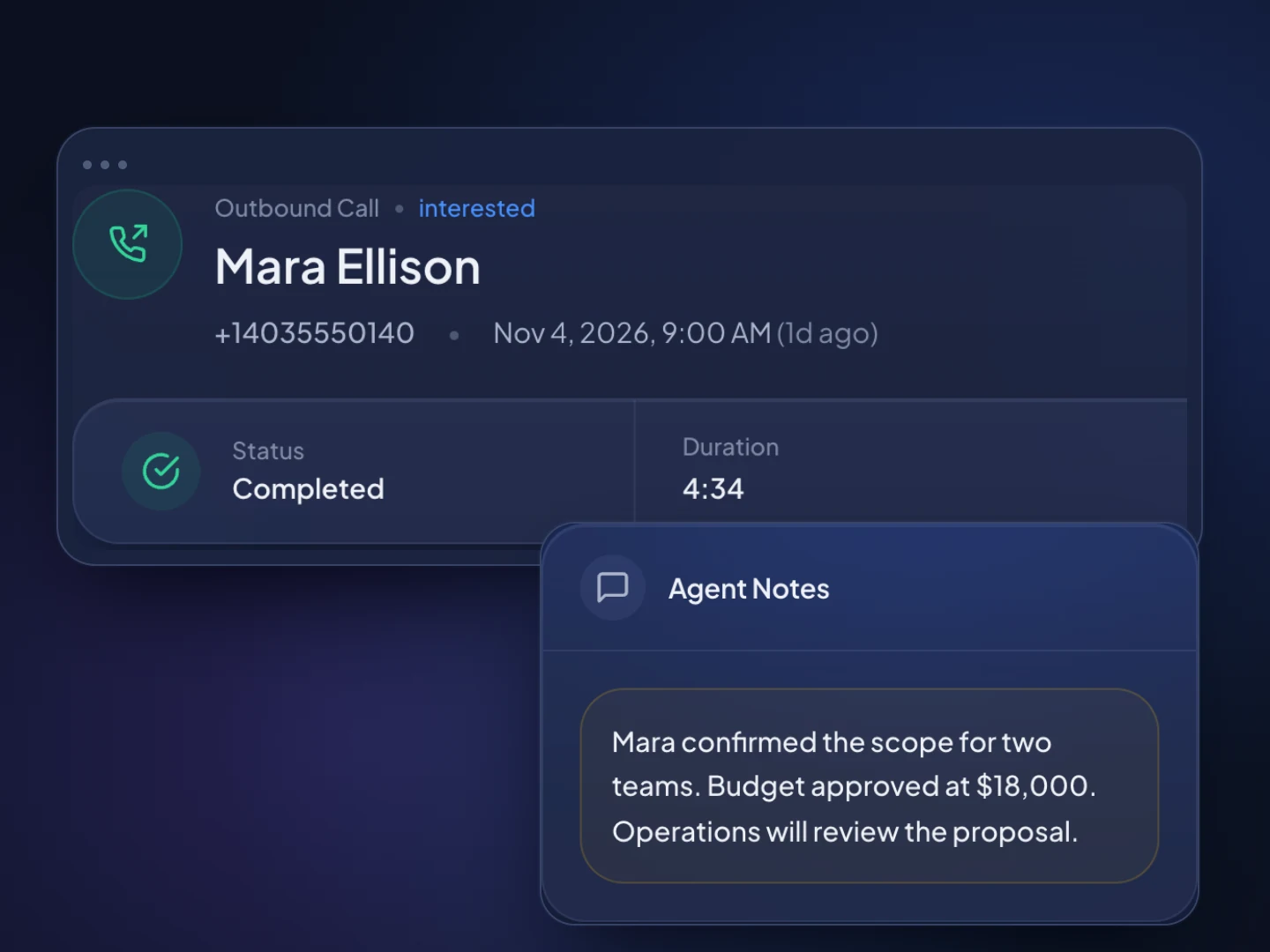
Contacts, companies, a deals pipeline with value by stage, tasks and a timeline of every call, text and email. There's no second system to sync the dialer with.
Orum alternative
Orum is an AI sales dialer for SDR and BDR teams that connects to Salesforce or HubSpot. TopReach is the CRM itself, with power and parallel dialing and two-way texting built in, for teams of roughly 2 to 20 people who would rather not run a CRM and a dialer side by side.
Why small teams look at TopReach
Contacts, companies, a deals pipeline with value by stage, tasks and a timeline of every call, text and email. There's no second system to sync the dialer with.
Power mode calls one number after another. Parallel mode calls several at once and connects the rep to whoever picks up. Both come with the $99 phone licence per caller.
Send SMS and MMS from your business numbers. Replies land in a shared inbox and on the contact's timeline, next to the calls.
TopReach can drop a voicemail, then send a text or an email on the days you choose, and it tracks every touch so nobody gets the same message twice.
Managers can listen in, whisper to the rep without the other person hearing, or barge in. Recording is a workspace setting: every call, no calls or each user's choice.
$55 a seat a month ($49 billed yearly), $99 a month for each person who calls with 3,000 minutes included, and $10 a month per phone number.
For the manager
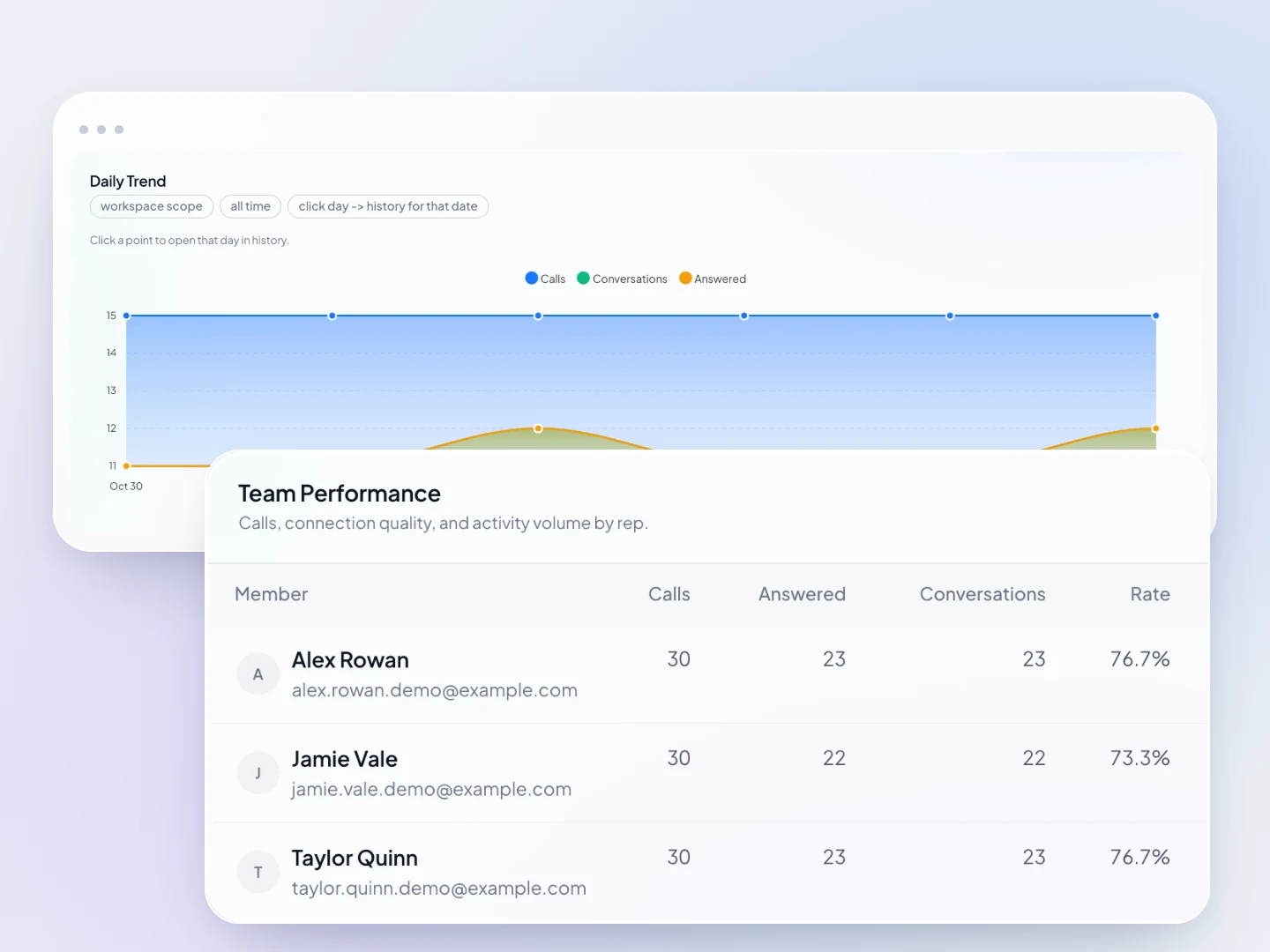
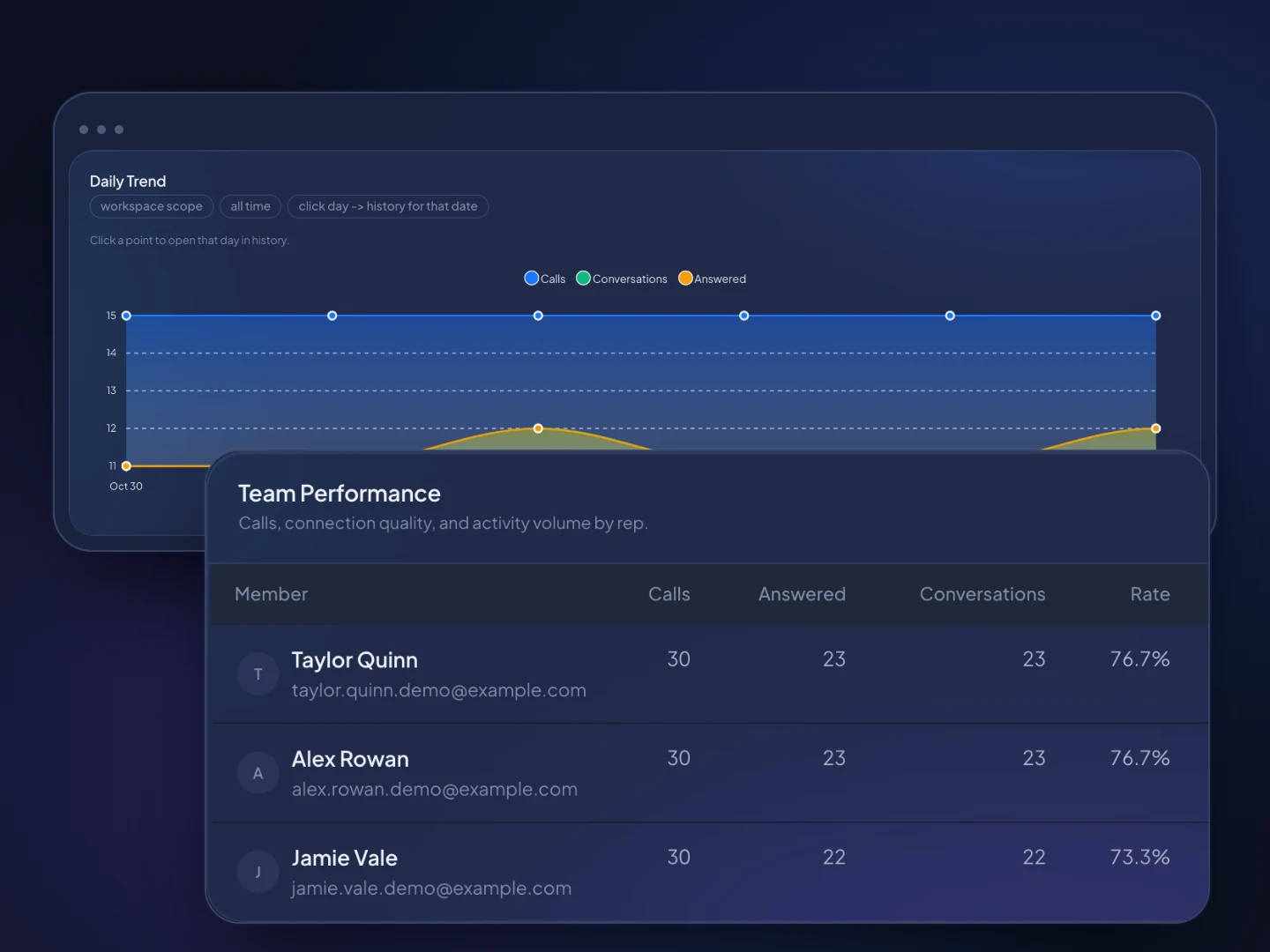
Analytics on conversations and outcomes per rep, with live monitoring when you want to coach a call as it happens.
How it works
Upload a spreadsheet exported from your current CRM or list. TopReach finds the number to call in whichever column it's in, and can find and merge duplicate contacts.
Give each person who calls a phone licence, and buy local numbers in the area codes you call at $10 a month each.
Save call lists, or dynamic lists that fill themselves from rules, choose power or parallel mode, and let follow-up run on the calls nobody answers.
Guide
Orum is an AI sales dialer with power and parallel modes, used by sales development teams. If you're looking at alternatives, the real question is usually whether your team needs a dialer layered on a CRM, or one product that holds the contacts, the dialer and the texting. This guide covers what Orum is, who it suits, where TopReach is different and the rules that apply to parallel dialing. Every statement about Orum comes from Orum's own website, checked in November 2026.
Orum is an AI-powered sales dialer that connects to the CRM and sales tools a team already uses. Its website says it's used by SDR and BDR teams, the reps whose job is to book meetings by phone.
Orum isn't a CRM. It connects to Salesforce, where it pulls in reports to dial and syncs data both ways, and to HubSpot, where it calls from lists and shows prospect details during the call. It also connects to sales engagement platforms such as Outreach, Salesloft and Apollo, and to Gong. Its help center also explains how to dial from a CSV upload, and says that notes and dispositions logged against a CSV list don't write back to the file or to a CRM.
For dialing, Orum's pricing page lists a power dialer, a parallel dialer, click to call, voicemail drop and a voicemail sequencer. Its dialer page says parallel mode runs up to five lines at once, and that its AI detects whether a person, a screener, a voicemail or a phone tree picked up. The pricing page also lists AI call summaries, AI objection detection, live listen and calling to more than 160 countries and regions.
Orum's pricing page shows no prices. It lists a nine-seat minimum, asks visitors to request pricing and says pricing depends on package type and number of users. Its free trial is limited to 500 dials.
Most small teams that look elsewhere aren't unhappy with parallel dialing. They're asking whether they need two products at all.
A dialer like Orum assumes a CRM underneath it. For a 15-person SDR team on Salesforce with Outreach sequences, that's the point: Orum speeds up the calling and leaves everything else where it is. A five-person brokerage, a recruiting desk or a founder raising a round often has no Salesforce or HubSpot to begin with. For them, adding a CRM in order to add a dialer means two subscriptions, two admin screens and a sync to keep healthy.
Size and budget are the other common reasons. Orum lists a nine-seat minimum on its pricing page, which is more seats than many small teams have, and because the page asks you to request pricing, you can't work out the cost before a sales conversation. The usual signs that a combined CRM and dialer will suit you better:
TopReach is the CRM, the dialer and the texting in one product, where Orum is a dialer that works on top of your CRM.
In TopReach, contacts, companies, a deals pipeline with drag-and-drop stages, tasks, reminders and a timeline of every call, text, email and note sit in the same workspace as the dialer. Power and parallel dialing are both included in one phone licence. Two-way texting (SMS and MMS) puts replies in a shared inbox. When a call isn't answered, TopReach can drop a voicemail, then send a text or an email on the days you choose.
Texting contacts isn't among the features listed on Orum's pricing page. If two-way texting matters to your team, ask Orum how it handles it before you decide.
TopReach is also narrower in ways that matter to some teams. Its AI writes call summaries and voices voicemails, but it has no live objection detection and no AI coaching. It has no built-in Salesforce, HubSpot, Outreach or Salesloft integration, only a public API with keys and webhooks. It calls Canada and the US, while Orum lists calling to more than 160 countries and regions. If those things are central to how you sell, Orum is built for them and TopReach isn't.
Orum is the better choice when you already run Salesforce or HubSpot and a sales engagement platform, and you want a dialer that plugs into that setup rather than replacing it.
Use parallel mode for large cold lists where most calls go unanswered, and power mode for everyone you can't afford to drop.
Power mode calls one number after another, so whoever answers always reaches a rep. Parallel mode calls several numbers at once and connects the rep to whoever picks up. When two people answer at the same moment, one of them gets dropped. Orum's help center describes the same trade-off: it connects the first person it detects and cancels the other calls.
That's fine on a big cold list, where a dropped call costs you little. It's the wrong choice for warm leads, callbacks, existing customers or high-value contacts such as investors, where a dropped call is a poor first impression. A common pattern is to run parallel mode for the first pass through a new list, then use power mode for everyone who has answered, asked for a callback or moved into the pipeline.
In TopReach both modes sit on the same $99 phone licence per caller, which includes 3,000 calling minutes a month, so a caller can use either mode without changing plans. Extra minutes come in packs of 1,000, 5,000 or 10,000 minutes.
Several rules apply, whichever dialer you use, and the ones that matter depend on who you call and where. This is general information, not legal advice.
Side by side
Orum's column comes from Orum's own website, checked November 2026.
FAQ

Start a 14-day free trial, or book a walkthrough to see power and parallel dialing with your own team.