Guide
How real estate agents prospect by phone, and how to run it well
Most agents who prospect by phone work the same five lists: expired listings, for-sale-by-owner sellers, their sphere and past clients, open-house visitors and online inquiries. This guide covers how to work each one, the pipeline stages and fields to set up, how often to follow up, which dialer mode to use and the do-not-call rules that matter most for real estate.
Which calls should a real estate agent make?
Five lists cover most real estate phone prospecting, and each has a different goal. Run them as separate call lists rather than one long one, because a call to a past client and a call to an expired seller have almost nothing in common.
- Expired listings: owners whose listing ended without a sale. They wanted to sell recently, so the goal is a listing appointment, and other agents are often calling the same owners the same week.
- FSBOs: owners selling without an agent. Most want to try it on their own first, so the goal is a real conversation and permission to check back, not a signed listing on the first call.
- Sphere and past clients: people who already know you. No pitch, just a check-in, a home-value update and a question about anyone they know who's thinking of moving.
- Open-house visitors: people who signed in and left a number. Call within a day, while they remember the house, and find out whether they're buying, selling or both.
- Online inquiries: people who asked about a home on your website or a portal. Speed matters most here, because they're shopping right now and may have asked other agents too.
How do you call expired listings and FSBOs?
Call early, keep it short and ask for a meeting. Expired listings show up in the MLS when they lapse, and the first few days after are when the owner is most open to a new plan, so each morning's list should be ready the night before.
TopReach doesn't supply expired or FSBO data and doesn't connect to the MLS. Agents usually pull expireds from their MLS and get phone numbers from a data service, then import the spreadsheet. The import finds the phone number in whichever column the file uses, and custom fields keep the property details on the contact.
FSBO sellers tend to hang up on a pitch. Ask about their plan instead: their price, their timeline and what they'll do if the home hasn't sold in a month. Offer something useful, such as recent sales nearby, and ask when you can check back. Log what they said on the contact, so the next call starts where this one ended.
- Scrub every expired and FSBO list against the National Do Not Call Registry and your own do-not-call list before you import it.
- Tag each contact with the list and month it came from, such as expired-2026-11.
- Put the property address, last list price and the date the listing expired in custom fields.
- Set a dated callback for every 'not now', so a maybe doesn't turn into a forgotten name.
What pipeline stages should a real estate team use?
Use stages that follow a client from first conversation to closing, and keep them the same for every agent so the board means the same thing to everyone. One set of stages can cover sellers and buyers: New lead, Contacted, Appointment set, Agreement signed, Active, Under contract, Closed and Nurture.
Agreement signed means a listing agreement for a seller and a written buyer agreement for a buyer. Since NAR's 2024 practice changes, agents in most MLSs need that buyer agreement in place before touring a home, so it marks a real step forward.
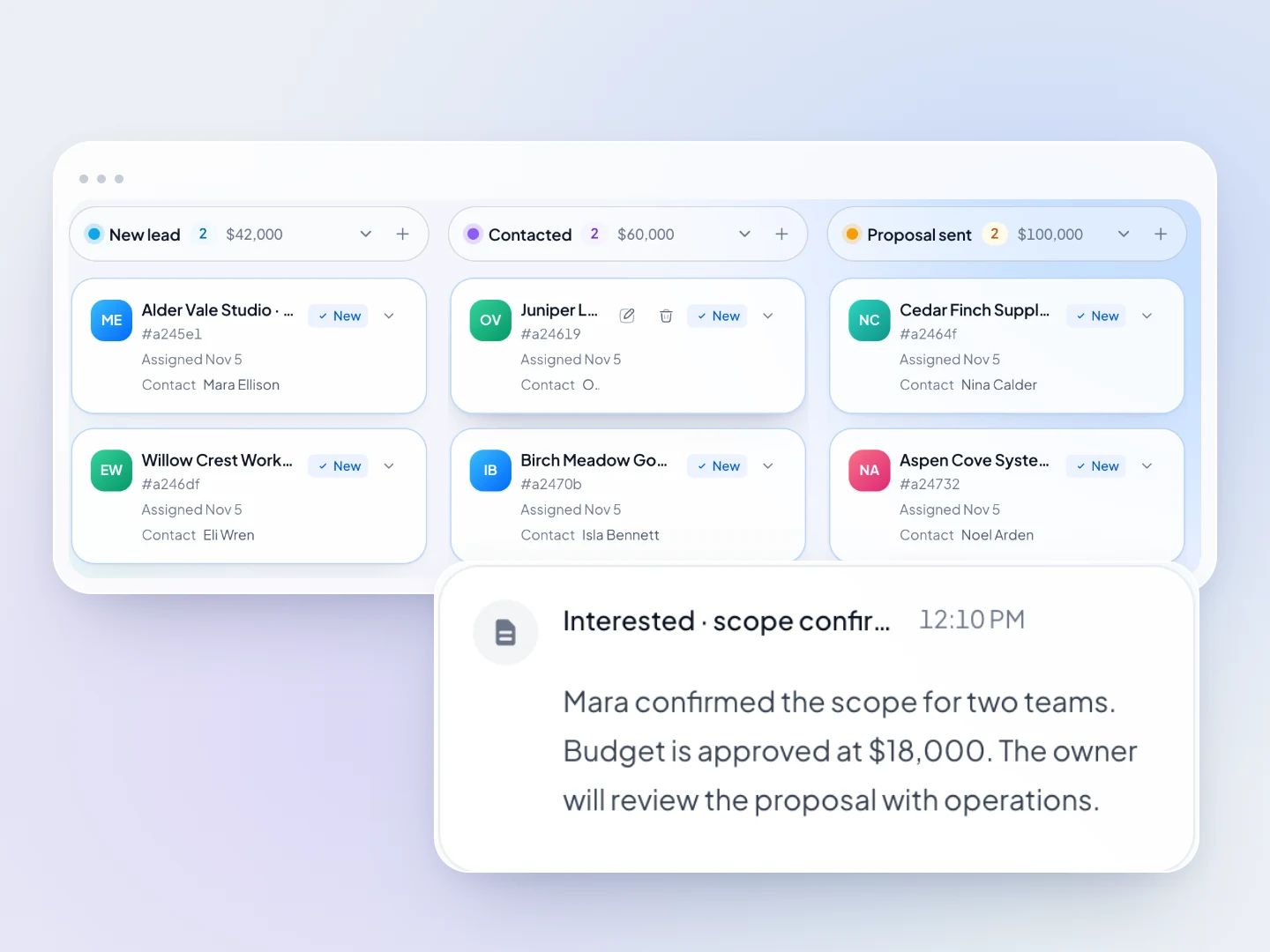
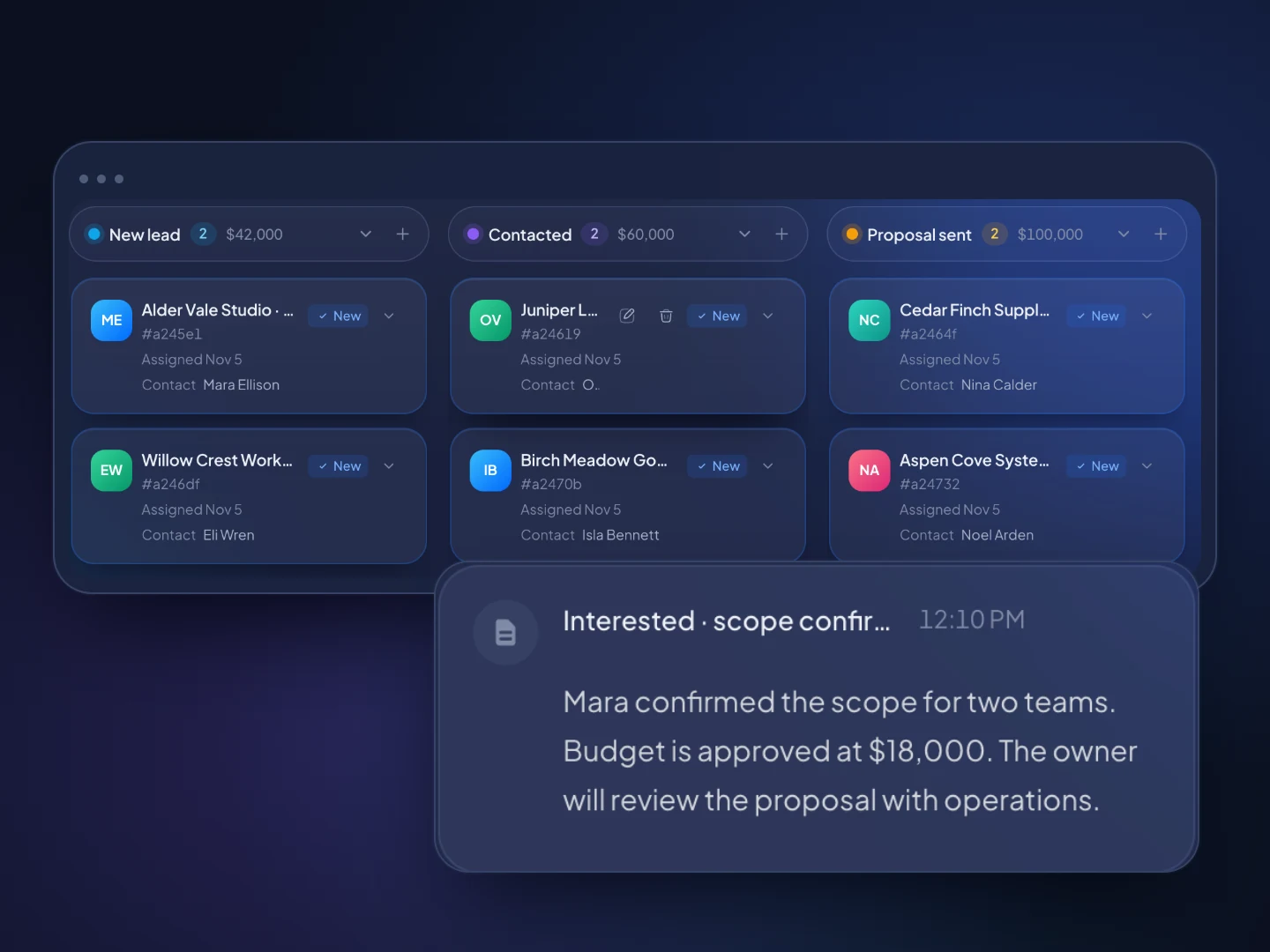
TopReach's deals pipeline has drag-and-drop stages and shows the value at each stage. Put your expected commission in the deal value, and a team lead can see what's under contract at a glance. Most leads aren't ready to move yet, so park them in Nurture with a follow-up task rather than marking them lost. A seller who says 'next spring' is a listing you can still win.
What should go in custom fields and tags?
Custom fields hold the facts an agent needs in the seconds before a call connects, and tags group contacts so you can build call lists from them.
Then build call lists from those fields and tags. A dynamic list fills itself from rules, so a list of every contact tagged expired and hot stays current without anyone maintaining it. A saved list works for a one-off, such as Saturday's open-house sign-ins.
- Property address, last list price and the listing or expiry date
- Lead source: expired, FSBO, sphere, past client, open house, website or portal
- Buying, selling or both, with price range and target neighborhoods
- Timeframe to move and the reason for the move
- Pre-approval status and lender, for buyers
- Closing date, for past clients, so you can call on the home's anniversary
- The date the list was last scrubbed against the do-not-call registry
- Tags for the source list and month, the open-house address, and hot, warm or nurture
How often should you follow up with real estate leads?
Follow up often in the first weeks, then settle into a steady rhythm. Most real estate leads are months away from a decision, and the agent still in touch in month three has a better shot than the one who stopped after two calls.
TopReach's automatic follow-up handles the touches after a missed call: it can drop a voicemail, then send a text or an email on the days you choose, and it tracks every touch so nobody gets the same message twice. Use it for inquiries, open-house visitors and clients who've agreed to hear from you. Don't use it on cold expired and FSBO lists, because prerecorded messages and marketing texts generally need consent you don't have.
- Online inquiries: call right away and again the same day, with a text if they've agreed to texts. Then every few days for two weeks, then Nurture.
- Fresh expireds: day one, then days 2, 3, 5 and 7, then weekly for a month. Leave voicemails yourself.
- FSBOs: about once a week while the home is on the market, with a new reason each time, such as a nearby sale or a buyer question.
- Open-house visitors: the next day, then a week later.
- Sphere and past clients: a personal call several times a year, plus the home's anniversary and any time the local market shifts.
Should agents use a power dialer or a parallel dialer?
Use power mode for most real estate calling. Power dialing calls one number after another, so the seller or past client who answers reaches an agent, and the call screen shows the contact and your last note before you say hello.
Parallel dialing calls several numbers at once and connects you to whoever picks up. It can give more conversations per hour on a big list where most calls go unanswered, such as year-old expireds nobody has worked. But when two people answer at once, one gets dropped. That's fine on a big cold list and wrong for your sphere, past clients or anyone who asked you to call. Under the Telemarketing Sales Rule, a dropped call counts as abandoned, and abandoned calls must stay under 3% of answered calls per campaign over 30 days.
Teams with inside sales agents (ISAs) usually have the ISA work new inquiries and expireds in power mode, set the appointment and move the deal to Appointment set. The agent picks it up with every call, text and note on the contact's timeline. Team leads can listen in live, review recordings and compare ISAs and agents on leaderboards. Both dialer modes come with the same $99-a-month phone licence.
What do-not-call rules apply to real estate calls?
In the US, an agent calling to win a listing is making a telephone solicitation, so the do-not-call rules apply. This is a general overview, not legal advice; check with your broker and your counsel before you start a calling program.
- National Do Not Call Registry: don't make sales calls to registered numbers unless you have an established business relationship, generally a closing in the past 18 months or an inquiry in the past 3 months, or the person's written permission. Expireds and FSBOs usually have neither. Use registry data no more than 31 days old.
- FSBOs: calling a FSBO seller to ask for the listing is generally treated as a sales call, so the registry applies. Calling about a buyer you represent is a different matter.
- Your own do-not-call list: honor every request to stop calling, across the whole team. TopReach keeps a do-not-call list that applies to every caller.
- Cell phones, voicemail drops and texts: under the TCPA, marketing calls and texts to cell phones made with an autodialer or a prerecorded voice generally need prior express written consent. A dropped voicemail is a prerecorded message, and do-not-call rules cover texts too.
- Calling hours and state laws: federal rules allow sales calls from 8 a.m. to 9 p.m. local time. Some states, such as Florida and Oklahoma, have their own telemarketing laws with narrower hours or stricter rules.
- Call recording: some states require everyone on a call to agree before it is recorded.
- Canada: the National Do Not Call List and CRTC telemarketing rules cover calls, and CASL covers texts and emails.