High-volume dialing
Power dial through a list one number after another, or run parallel mode on big cold lists to call several numbers at once and connect agents to whoever picks up.
Call centers
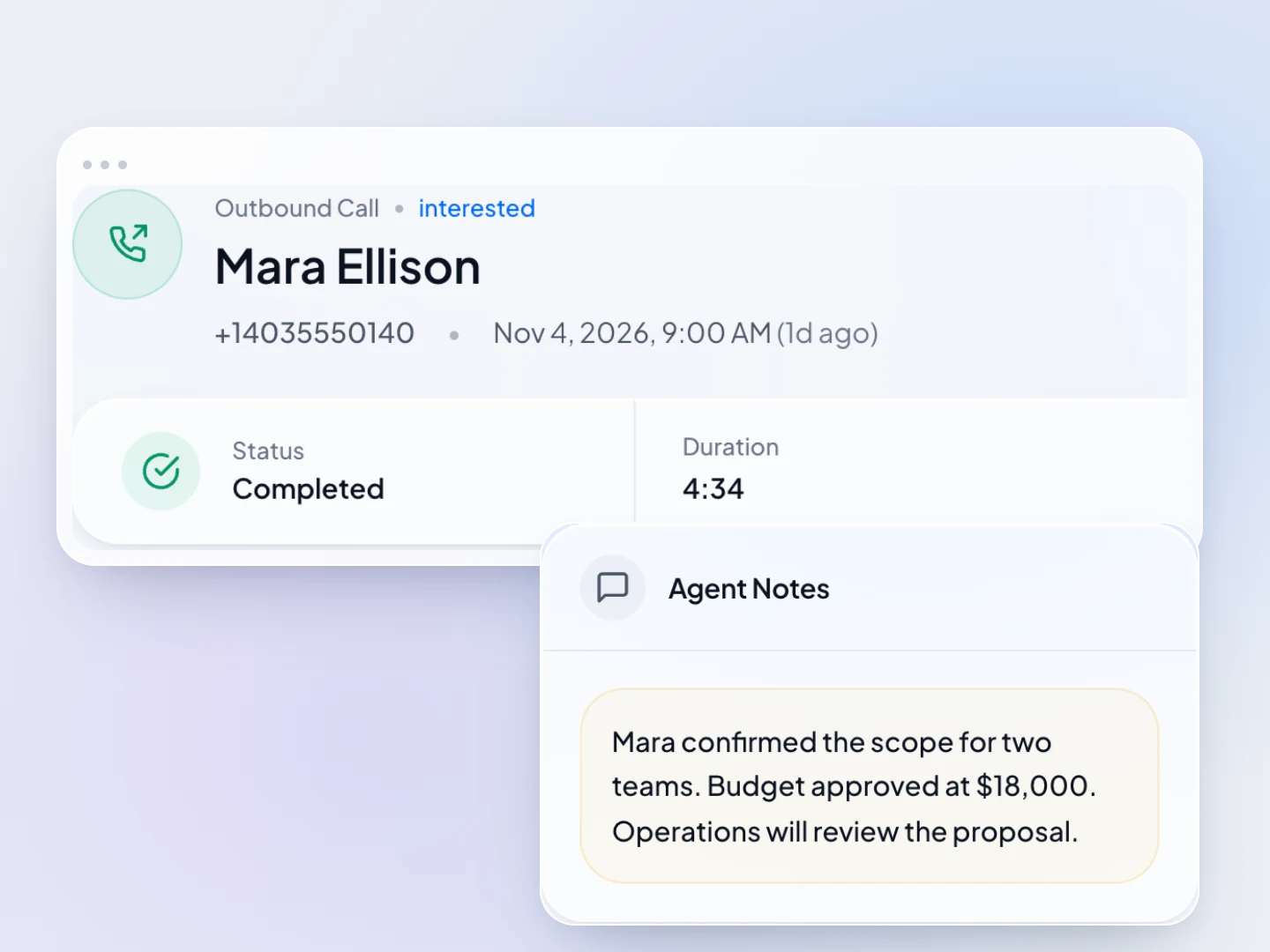
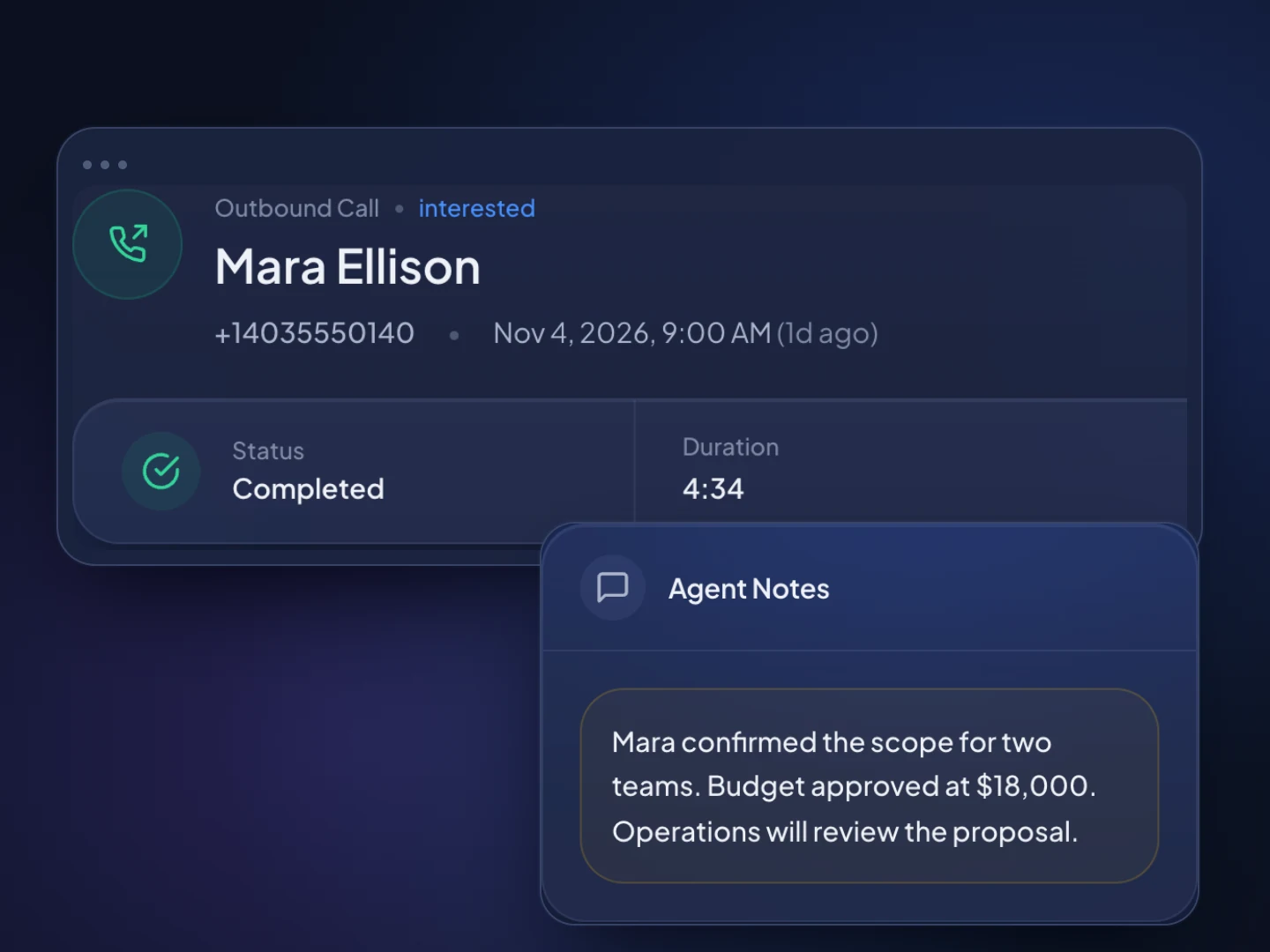
TopReach is a CRM with a built-in power dialer, parallel dialer and two-way texting for outbound call centers of roughly 2 to 20 agents. Agents call through campaign lists with every outcome saved to the contact, and supervisors listen in, whisper, barge in and compare results per agent.
For calling floors
Power dial through a list one number after another, or run parallel mode on big cold lists to call several numbers at once and connect agents to whoever picks up.
Listen in on any agent's call, whisper coaching without the other person hearing, or barge in when a call needs a supervisor.
Recorded calls save to the contact's timeline, so QA reviews and coaching start from what was actually said.
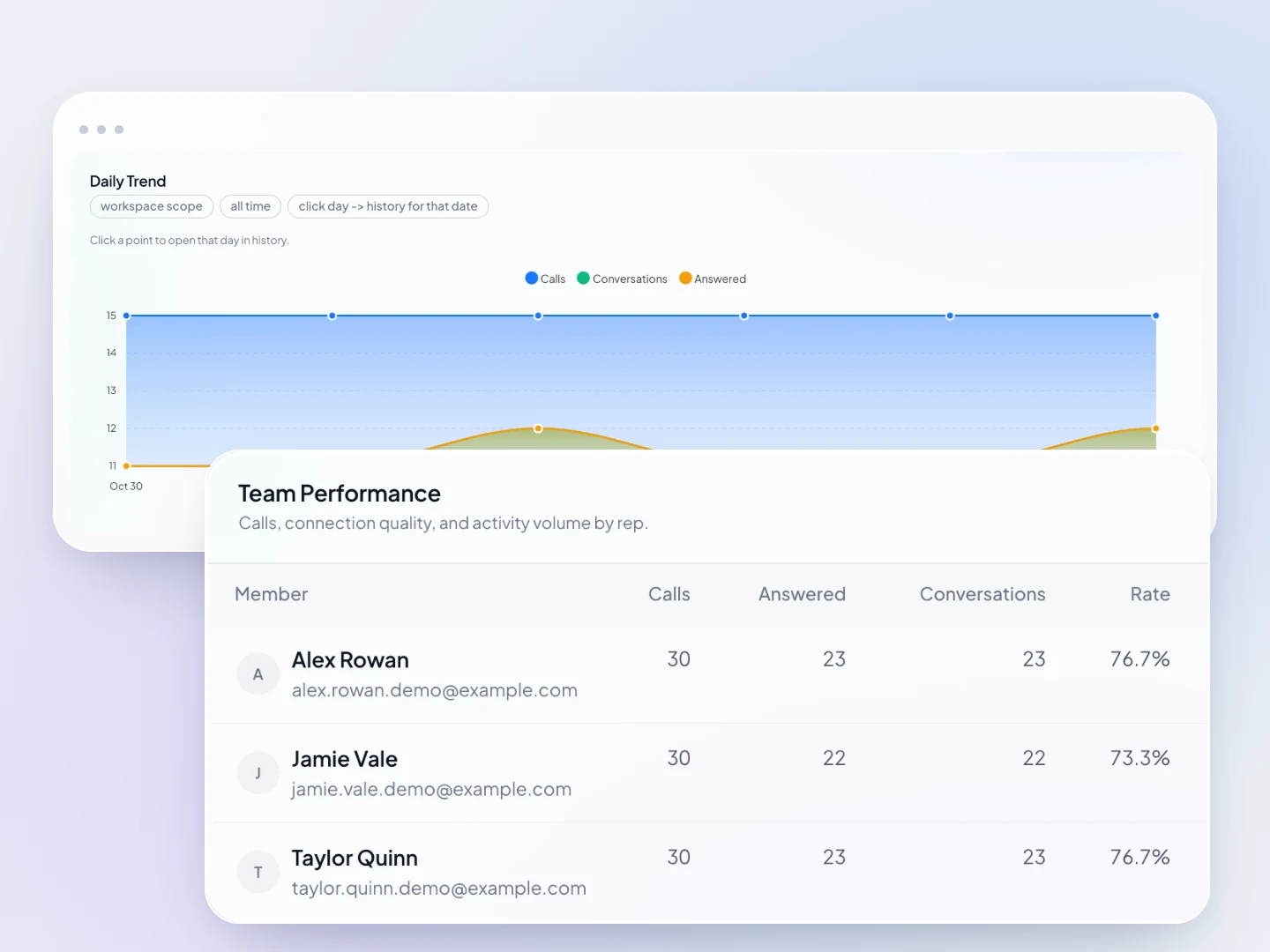
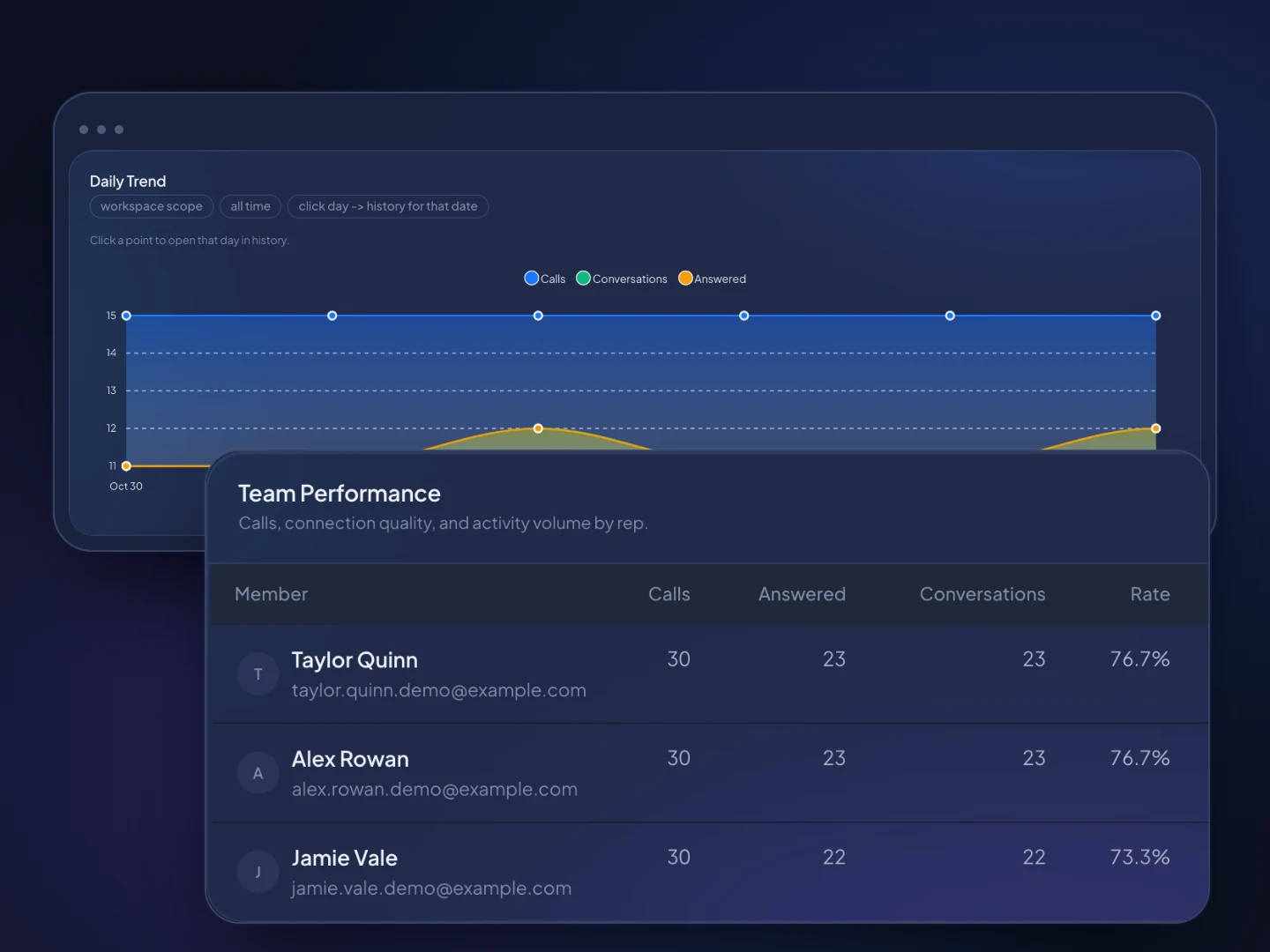
Conversations and outcomes per agent, with leaderboards, so you can see who is getting results and who needs help.
Owners, managers and reps each have their own role, and everyone works from the same contacts, lists and pipeline.
Set a reminder for every promised callback, and let unanswered calls get a voicemail, text or email on the days you choose.
The floor view
How it works
Add a seat for each agent and manager, a $99 phone licence for each agent who calls (every dialer mode, 3,000 minutes included), and local phone numbers at $10 a month each.
Upload the spreadsheet you or your client provide. TopReach finds the phone number in whichever column it's in, and tags and custom fields keep campaigns apart.
Agents work their lists in power or parallel mode, supervisors listen in, whisper or barge in, and conversations and outcomes per agent show who needs coaching.
Guide
A small outbound call center runs on three things: clean lists, agents who spend their hours in conversations rather than dialing, and supervisors who can hear what is happening on the floor. This guide covers how a team of 2 to 20 agents can organize campaigns, log outcomes, choose a dialer mode, supervise and run QA, and which calling rules to check before the first shift.
A call center CRM keeps contacts, the dialer and the call history in one system, so every call an agent makes is logged against the right record without anyone copying notes between tools.
Enterprise contact-center suites are built around inbound queues, IVR menus and workforce scheduling for hundreds of seats. A small outbound floor needs less, and needs it to work together: lists to call, a dialer that keeps agents busy, outcomes that save with the call, follow-up for the people who didn't answer, and a way for a supervisor to hear what is going on and step in.
TopReach covers that outbound side. It is a CRM with a built-in power dialer, parallel dialer and two-way texting, with supervisor listen-in, whisper and barge-in, call recordings, and conversations and outcomes per agent. It suits teams of roughly 2 to 20 agents. It doesn't supply call lists: you or your client provide the data, imported from a spreadsheet.
Give each campaign its own list, script and goal, and keep campaigns apart even when they draw on the same contacts. Mixing a cold prospecting list with callbacks in one queue hides which one is working.
In TopReach, a campaign can be a saved call list or a dynamic list that fills itself from rules, such as every contact tagged with a campaign name whose status is still open. Before a list goes live, put the fields agents need on the contact record:
Agents should log one outcome from a short, fixed list on every call, because every report you run is only as good as the outcomes behind it. If one agent logs 'not interested' where another logs 'call back', the numbers stop meaning anything. A workable set for outbound calling:
Use parallel mode on large cold lists where most calls go unanswered, and power mode for callbacks, warm contacts and anyone you can't afford to drop.
Power mode calls one number after another, so whoever answers reaches an agent. Parallel mode calls several numbers at once and connects the agent to whoever picks up. That cuts the time agents spend listening to rings and voicemail greetings, which is why outbound floors use it. The trade-off: when two people answer at once, one gets dropped. On a big cold list that is an acceptable cost. On a callback the agent promised, an existing customer or a high-value prospect, it isn't.
Dropped calls also have a legal limit. For telemarketing to US consumers, the Telemarketing Sales Rule treats a call that isn't connected to an agent within two seconds of the person's greeting as abandoned, and caps abandoned calls at 3% of answered calls per campaign over 30 days. Agree with counsel how you'll stay under it before you run parallel mode on consumer lists.
Both modes come with the same $99-a-month phone licence, so you can pick the mode list by list.
Supervisors manage a small floor by setting each shift's lists, listening to live calls and coaching from recordings and per-agent results, rather than by watching dial counts.
In TopReach, owners, managers and reps each have their own role, and a manager can listen in, whisper or barge in from their own seat. Measure conversations and outcomes rather than dials: an agent who dials 300 numbers and talks to 15 people has done less than one who talks to 30. A simple daily rhythm works for most teams:
Run QA by scoring a small, regular sample of recorded calls for every agent against a short scorecard, and by reviewing those scores with the agent.
Scoring every call isn't realistic for a small team, and scoring only the calls that went wrong teaches the wrong lesson. Every few weeks, have everyone score the same recording and compare; when scores drift apart, the scorecard needs clearer wording. Pick a few calls per agent each week, including some that ended in a sale or appointment, and score them on the same points:
Outbound call centers fall under telemarketing and consumer-protection rules on who you can call, when, how you dial and how you record. They vary by country, state and type of call, so check with your counsel or compliance team before you start. This is a general overview, not legal advice.
TopReach keeps your internal do-not-call list and handles texting opt-outs across every agent. Checking lists against the national registries is a separate step to do before you import. The main rules:
FAQ

Start a 14-day free trial, import a campaign list and put your agents on the dialer, or book a walkthrough with our team.