Power and parallel dialing
Power mode calls one number after another, so whoever answers reaches a rep. Parallel mode calls several numbers at once on big cold lists and connects the rep to whoever picks up. One phone licence covers both.
Cold calling software
TopReach is a CRM with a built-in power dialer, parallel dialer and two-way texting. Reps call through their lists, unanswered calls get a voicemail and then a text or an email on the days you choose, and every call, recording and outcome saves to the contact, so you don't need a separate dialer, texting tool and CRM.
What cold calling takes
Power mode calls one number after another, so whoever answers reaches a rep. Parallel mode calls several numbers at once on big cold lists and connects the rep to whoever picks up. One phone licence covers both.
When a call isn't answered, TopReach can drop a voicemail, then send a text or an email on the days you choose. It tracks every touch, so nobody gets the same message twice.
Buy numbers in the area codes you call, at $10 a month each, and turn on local presence: each prospect sees the number from their own area code, or from their province or state.
When someone asks not to be called, they go on the workspace's do-not-call list and no rep dials them again. Texting opt-outs are handled too.
Record every call, no calls, or let each rep choose. Managers can listen in, whisper to the rep without the prospect hearing, or barge in to join the call.
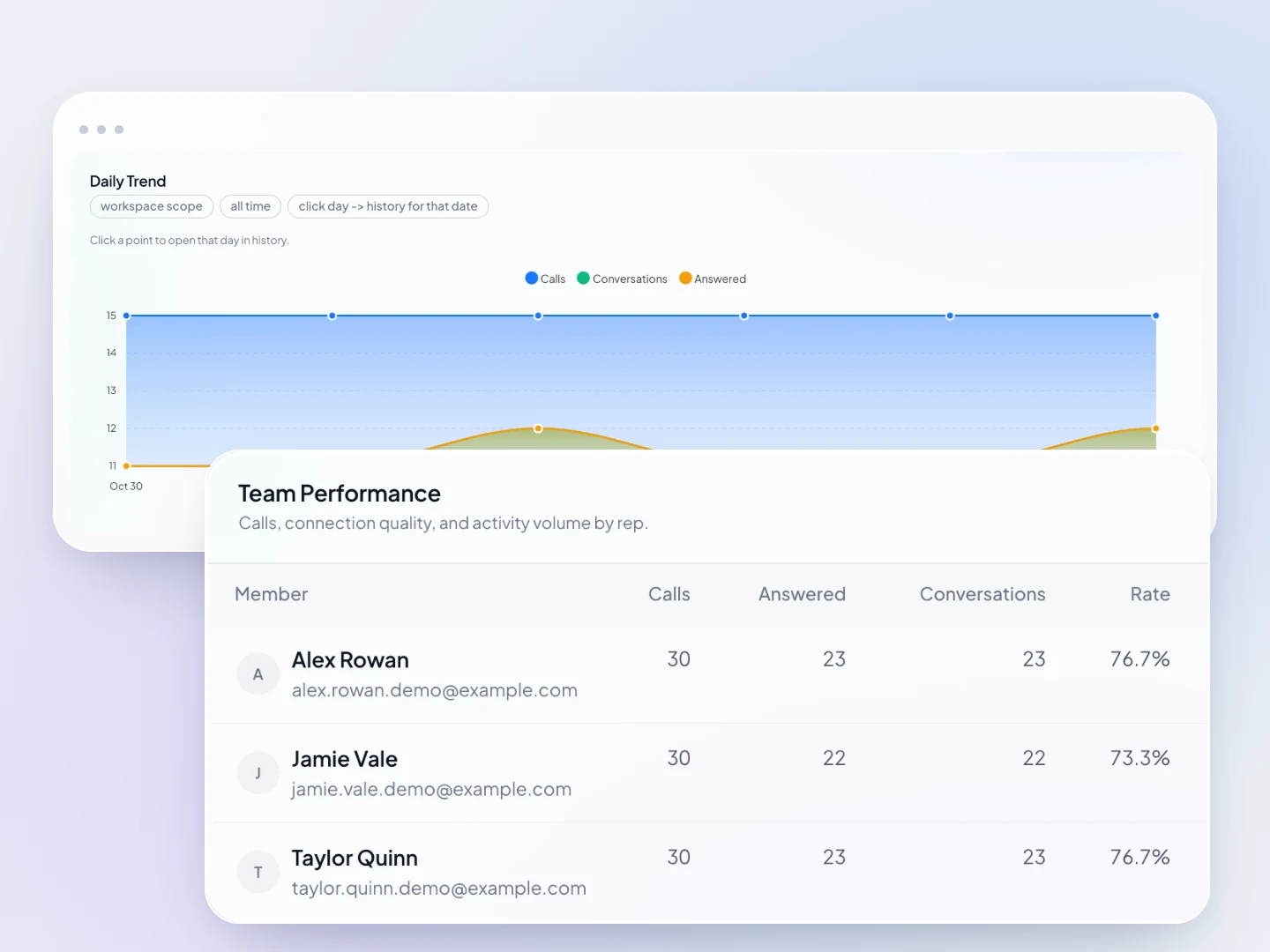
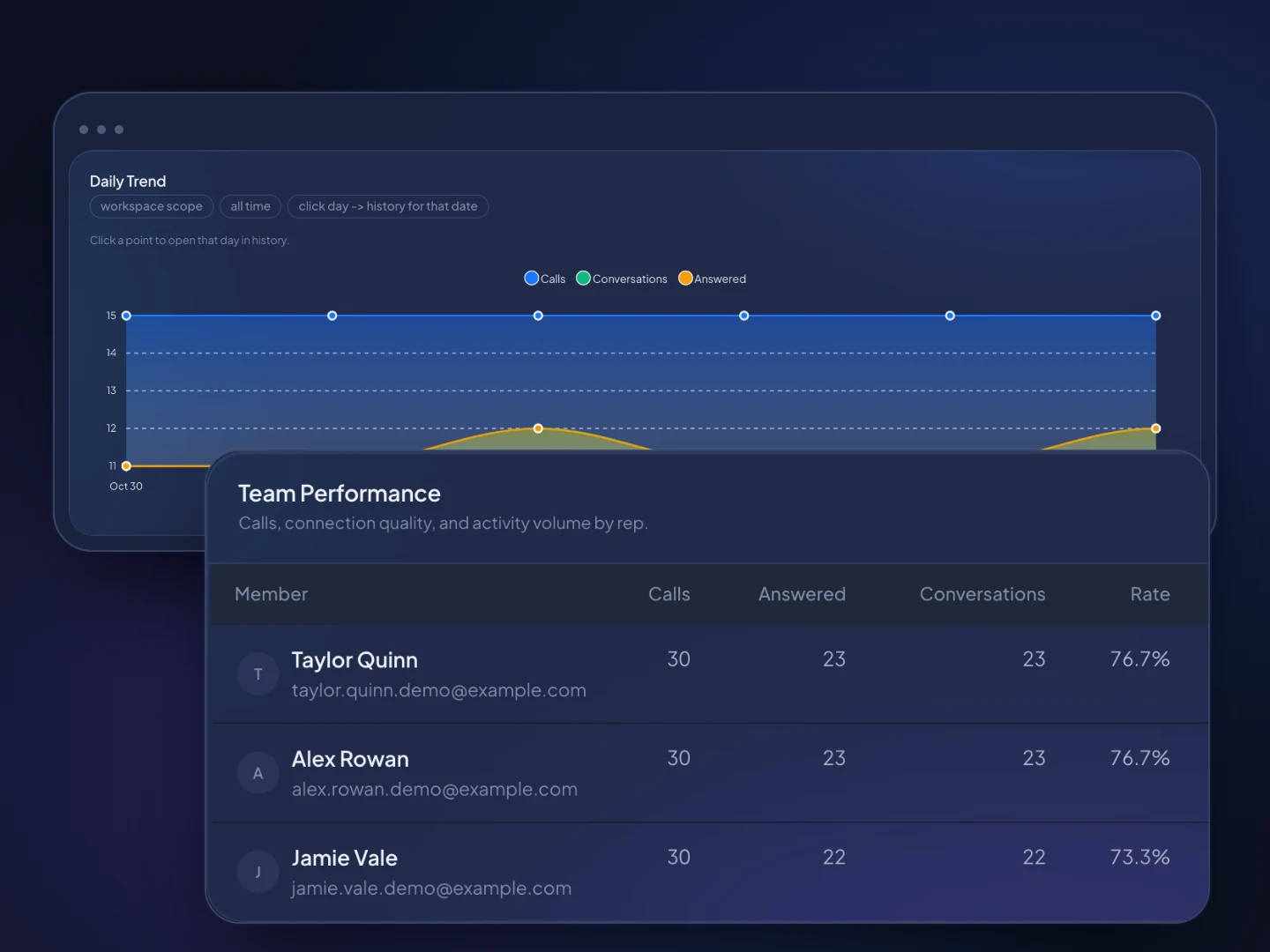
See conversations and outcomes for each rep, with leaderboards, so you coach on what came of the calls rather than how many were dialed.
A call list’s script
Manager view
How it works
Scrub your list against the National Do Not Call Registry, then import the spreadsheet. TopReach finds the phone number in whichever column it's in and can find and merge duplicate contacts.
Run parallel mode on first attempts at a big cold list, and power mode for callbacks and anyone who has already spoken to you.
Missed calls get a voicemail, then a text or an email on the days you set. Managers listen in, whisper or barge in, and compare conversations and outcomes per rep.
Guide
Cold calling software has three jobs: get reps to live conversations faster, handle what happens when nobody answers, and keep a record of every attempt. This guide covers what to look for in each, what it costs and which rules to check, and says plainly what TopReach does and doesn't do.
Cold calling software should dial for your reps, run the follow-up when nobody answers and save every call, outcome and recording to the prospect's record, so the next call starts where the last one ended.
Most of a cold caller's day goes to rings, voicemail greetings and people who don't pick up. Good software cuts that dead time and takes over the repetitive work: dialing the next number, leaving the voicemail, sending the follow-up text and logging the outcome. When the dialer and the CRM are separate tools, reps copy notes between them, callbacks slip and managers see dials without knowing what came of them.
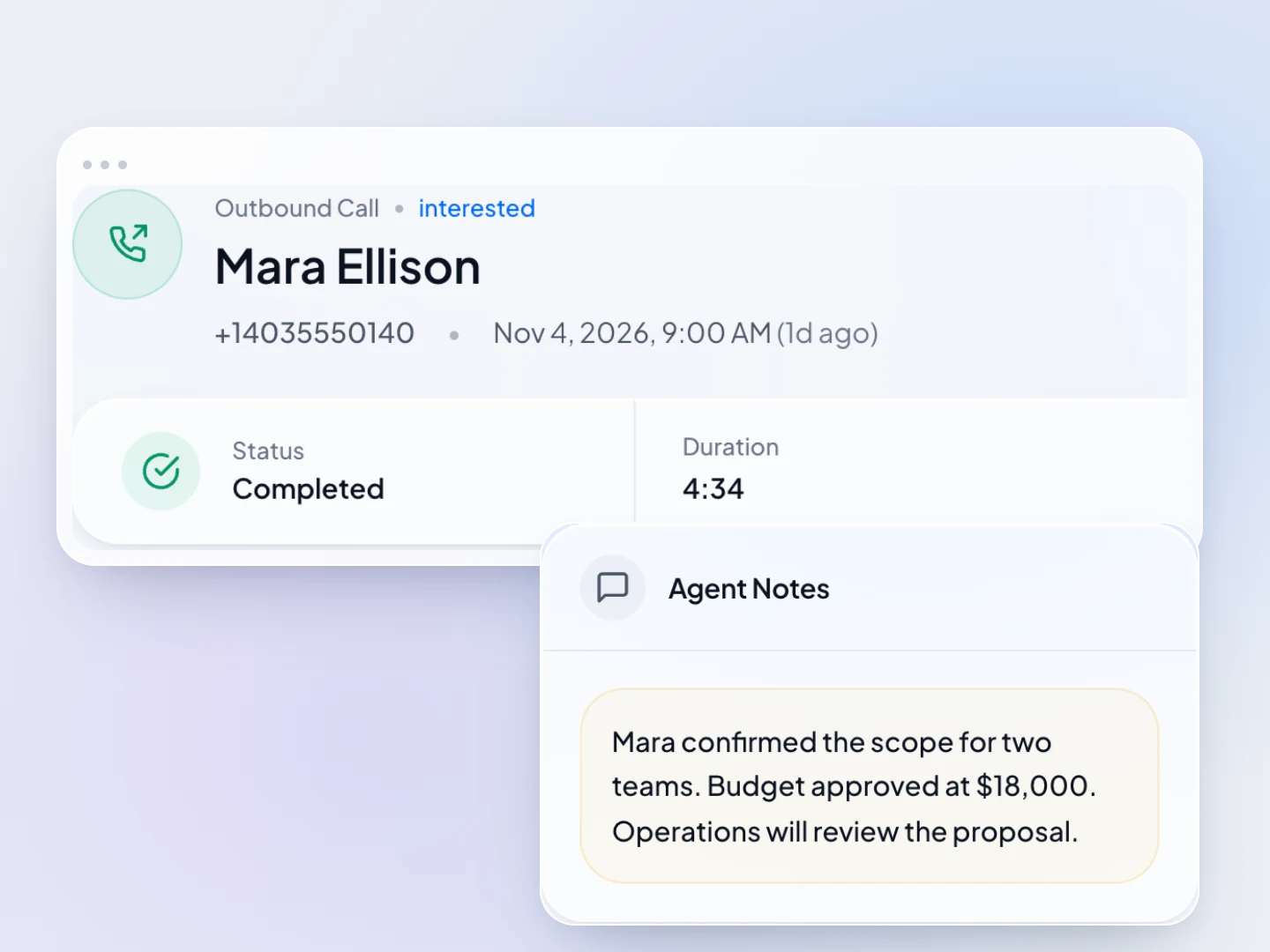
TopReach is a CRM with a power dialer, a parallel dialer and two-way texting inside it, so every call lands on the contact's timeline with its outcome and recording. For the outbound process around the software, such as who prospects, who closes and which pipeline stages to use, see our page on a CRM for outbound sales. When you compare tools, check:
Use a parallel dialer on large cold lists where most calls go unanswered, and a power dialer for callbacks, warm prospects and accounts you can't afford to lose.
A power dialer calls one number after another, so whoever answers always reaches a rep. A parallel dialer calls several numbers at once and connects the rep to whoever picks up, which cuts the time spent listening to rings when most of a list never answers.
The trade-off is the dropped call. When two people answer at the same moment, one of them gets dropped. On a big cold list that's an acceptable cost; on a prospect who asked you to call back, it isn't. For US consumer telemarketing, the Telemarketing Sales Rule also limits abandoned calls to 3% of calls answered by a live person, measured per campaign over each 30-day period.
A common split is parallel mode for first attempts on a fresh cold list, then power mode once someone has spoken to you. In TopReach both modes come with the same $99-a-month phone licence per caller, so you choose list by list. Our power dialer and parallel dialer pages cover each mode, and the guide to power vs parallel dialing compares them.
The software should leave a short voicemail without the rep recording it live, then follow up by text or email on a schedule, and stop when the prospect replies or opts out.
Voicemail drop means the software plays a message set up ahead of time, so the rep doesn't repeat it all day. When a call isn't answered, TopReach can drop a voicemail, then send a text or an email on the days you choose. It tracks every touch, so nobody gets the same message twice, and text replies land in a shared inbox and on the contact's timeline.
Keep each touch useful: a voicemail that says who you are and why you called, a two-line text, an email with one specific reason to talk. Our cold calling cadence guide covers how many attempts to make and how to space them.
Two cautions. Under the US TCPA, a dropped voicemail is a prerecorded message, and texts to cell phones generally need consent, so check what your list's consent covers before you switch them on. And follow-up should stop the moment someone opts out.
They can, because many people screen calls from numbers they don't recognize, but a local number won't rescue a poor list or a number that carriers have labeled as spam.
In TopReach you buy local numbers in the area codes you call, at $10 a month each, and turn on local presence. Before each call it picks the number with the prospect's area code, or else one from their province or state, and it keeps the same number for every follow-up. A team calling three regions can keep a number in each and work one list across all three.
Whatever you use, the caller ID has to be honest. The Truth in Caller ID Act bars misleading caller ID used to defraud or cause harm, the TSR requires telemarketers to transmit caller ID, and carriers use STIR/SHAKEN to check that a call comes from a number the caller is authorized to use. Our guide to local presence dialing covers the trade-offs.
Coach from real calls, live and recorded, and judge reps on conversations and outcomes rather than dials.
In TopReach, an admin sets recording for the workspace: every call, no calls, or each user's choice. Managers can listen in on a live call, whisper to the rep without the prospect hearing, or barge in to join, which makes it practical to sit in on a new rep's first calling block and prompt them in the moment.
For results, TopReach shows conversations and outcomes per rep, with leaderboards. Dial counts alone reward the wrong thing: a rep with fewer dials and more booked meetings is doing better than one with the reverse. A weekly routine for a small team:
Most cold calling software is priced per user, with minutes and numbers included or charged on top, so compare the cost for each person who calls, not the seat price.
TopReach charges $55 a seat a month, or $49 a seat a month billed yearly, with every feature in the seat. Each person who calls also needs a phone licence at $99 a month; it's per caller, never one for the team. The licence covers power and parallel dialing and includes 3,000 calling minutes a month. Extra minutes come in packs of 1,000, 5,000 or 10,000, with optional auto top-up. Phone numbers are $10 a month each, and there's a 14-day free trial.
So five callers, each with a seat, a phone licence and one number, pay $820 a month on monthly billing: $275 for seats, $495 for licences and $50 for numbers. Before you buy any tool, check:
Cold calling is legal in the US and Canada within rules on do-not-call lists, consent, abandoned calls, caller ID, calling hours and recording, and software handles only part of that. This is general information, not legal advice.
TopReach keeps an internal do-not-call list for the workspace, so once someone asks not to be called, no rep dials them again, and it handles texting opt-outs. It doesn't check numbers against the National Do Not Call Registry, so scrub your list before you import it, and refresh lists you keep calling: the FTC requires sellers and telemarketers to sync with the Registry at least every 31 days.
FAQ

Start a 14-day free trial, import a scrubbed list and run your first calling block, or book a walkthrough with our team.