A parallel mode when you want it
Power mode calls one number after another, like a single-line dialer. Parallel mode calls several at once for large cold lists. Both are on the same $99 phone licence.
PhoneBurner alternative
PhoneBurner is a power dialer with its own built-in CRM, and it calls one person at a time by design. TopReach is a CRM with a power dialer and a parallel dialer on one phone licence, plus two-way texting, for small teams that want both modes and the pipeline in one place.
What's different
Power mode calls one number after another, like a single-line dialer. Parallel mode calls several at once for large cold lists. Both are on the same $99 phone licence.
Drag deals through your own stages and see the total value at each one, next to contacts, companies, tasks and reminders.
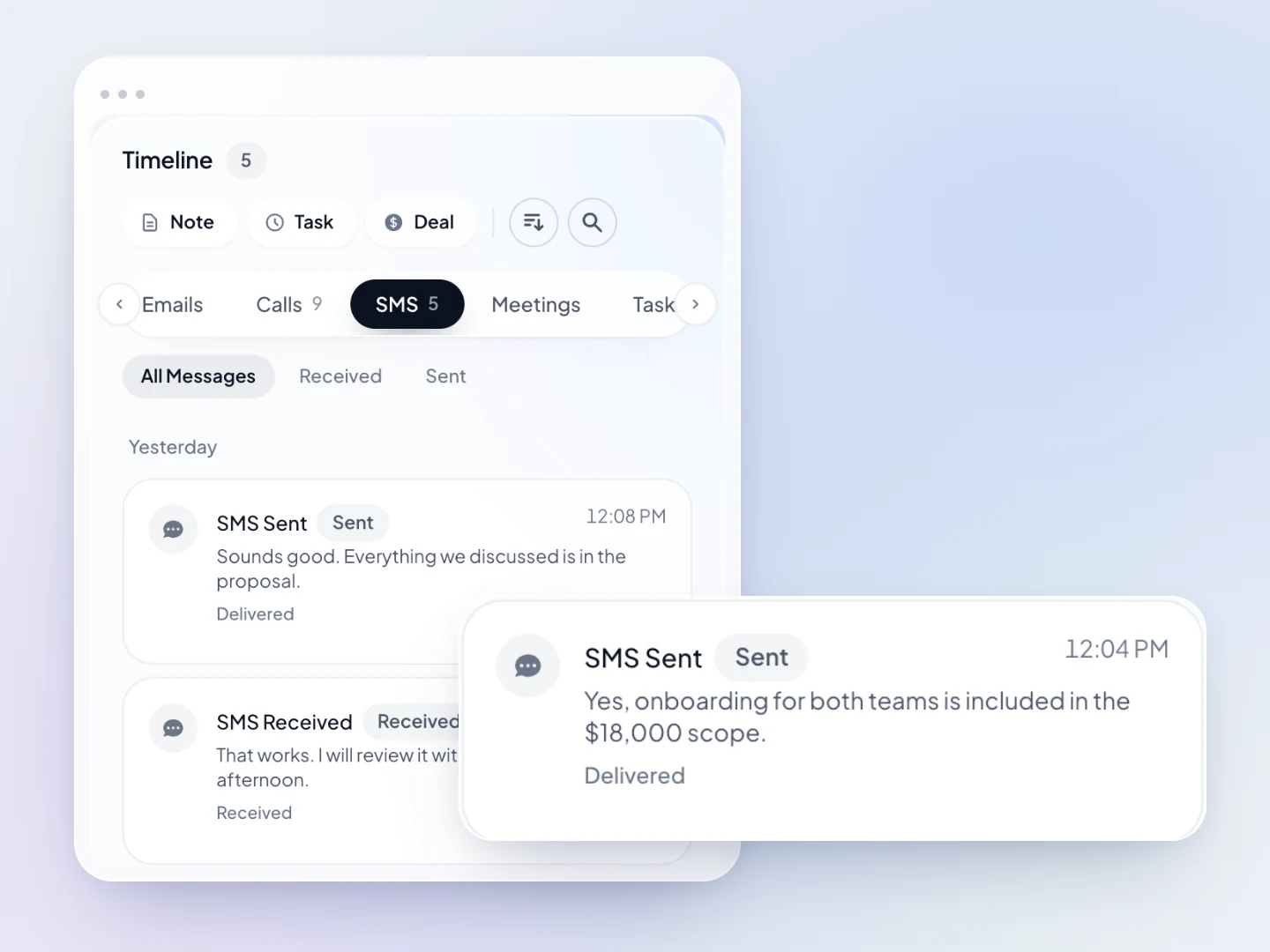
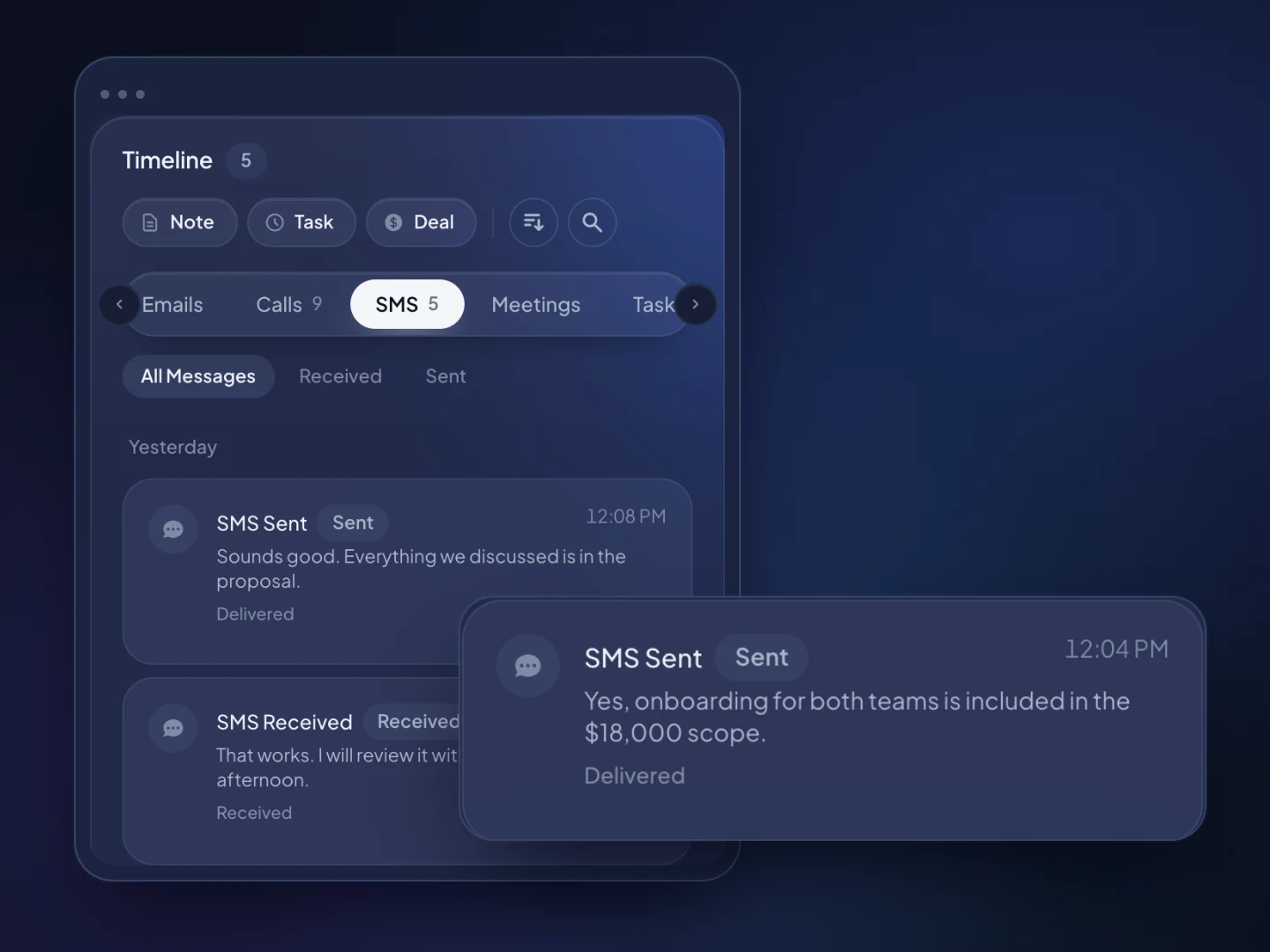
Two-way SMS and MMS from your business numbers, with replies in a shared inbox and on each contact's timeline.
TopReach can drop a voicemail, then send a text or an email on the days you choose, and tracks every touch so nobody gets the same message twice.
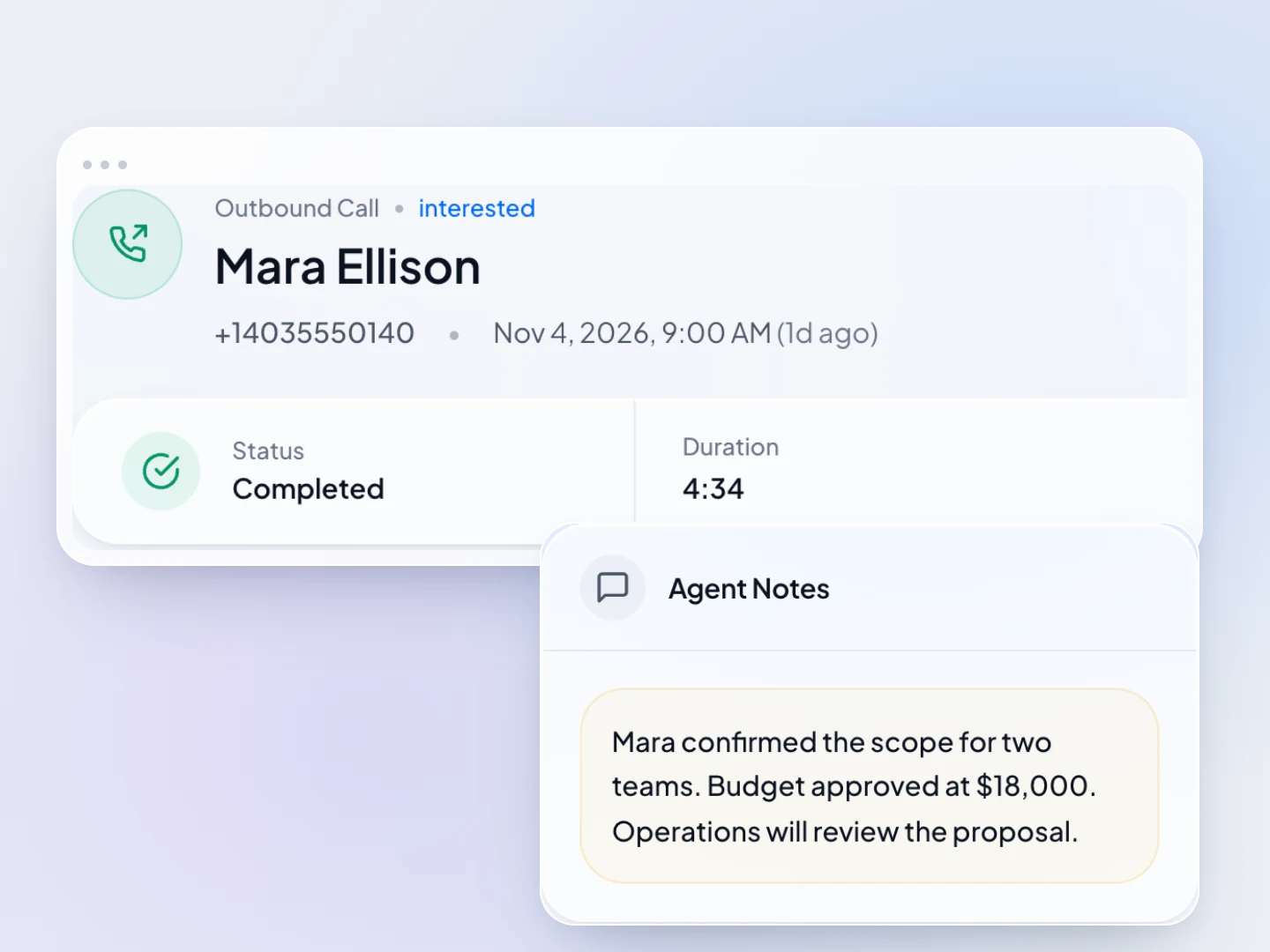
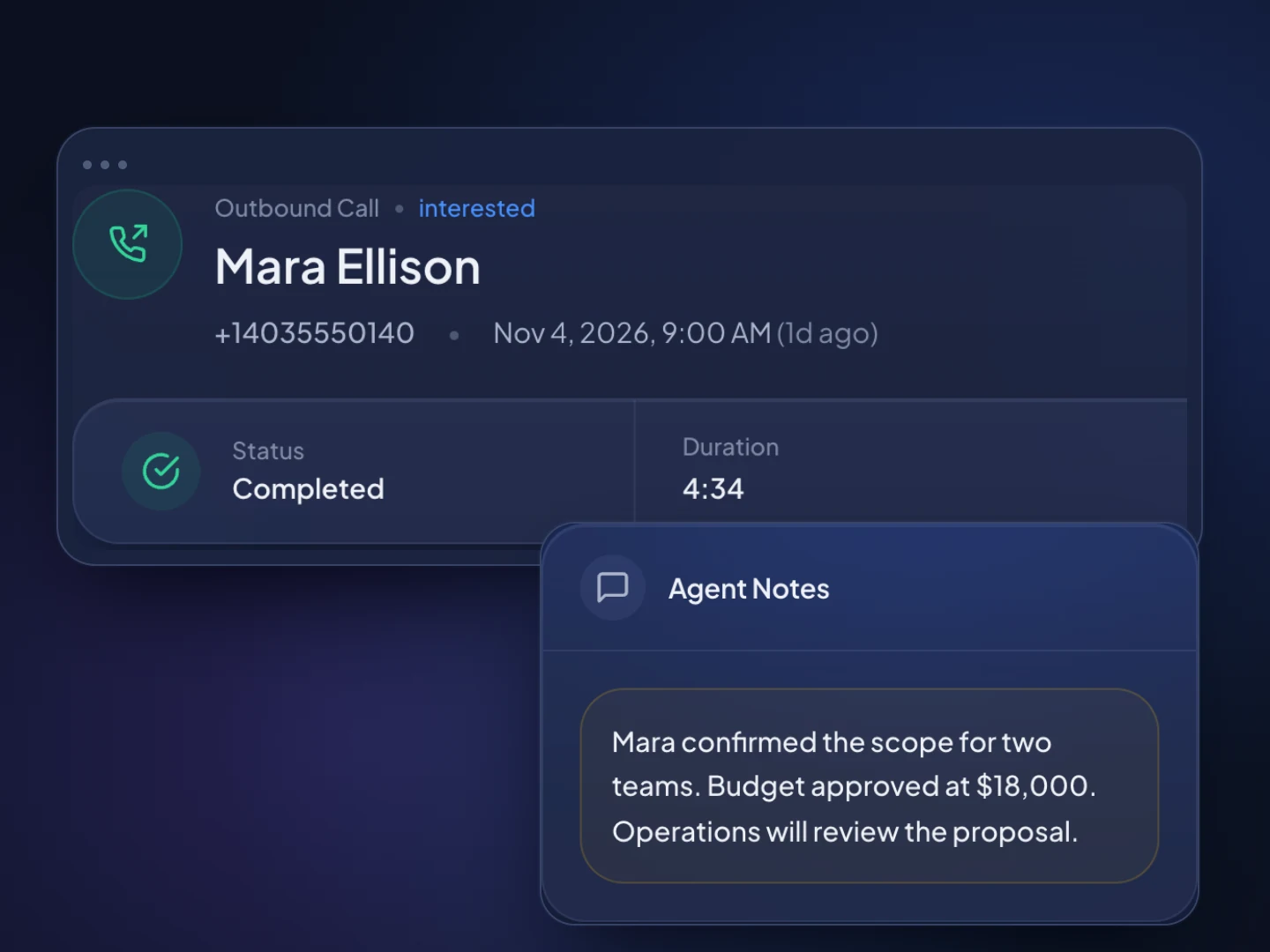
Managers can listen in, whisper to the rep or barge in on any call, and see conversations and outcomes per rep on leaderboards.
Saved call lists, and dynamic lists that fill themselves from rules you set, so reps know who to call next.
Follow-up
A voicemail, then a text or an email on the days you choose, with every touch saved to the contact's timeline.
How it works
Upload a spreadsheet of your contacts. TopReach finds the number to call in whichever column it's in, and can find and merge duplicate contacts.
Add a phone licence for each person who calls, and buy local numbers in the area codes you call at $10 a month each; local presence shows each lead the one from their area.
Use power mode for warm leads and callbacks and parallel mode for large cold lists, then let follow-up run on the calls nobody answers.
Guide
PhoneBurner and TopReach have more in common than most dialer comparisons: both put a CRM and a dialer in one product for teams that work the phones. The real differences are about dialing philosophy, texting, the pipeline and how you pay for minutes. This guide covers what PhoneBurner offers, the fair case for single-line dialing, where TopReach differs and when PhoneBurner is the better choice. Every statement about PhoneBurner comes from PhoneBurner's own website, checked in November 2026.
PhoneBurner is a cloud-based power dialer with a built-in CRM, for teams that sell by phone. Its site lists solutions for financial services, mortgage, insurance, political and solar teams, and its FAQ says it serves teams of all sizes, from a single seat to hundreds.
The dialer calls one person at a time. PhoneBurner's FAQ calls it a single-line dialer, and when it asks whether you can dial more than one person at a time, the answer is no, because multi-line dialing leads to dropped calls and TCPA and TSR risk. Its power dialer page says there are no abandoned calls. Reps can leave a pre-recorded voicemail with one click while the dialer moves to the next contact.
PhoneBurner's built-in CRM covers contact records with custom fields, folders and tags, saved searches that drive call sequences, email and text templates, and call, email and SMS history. Its CRM page says that for lean or phone-first teams the built-in CRM can be enough, and that for others it works alongside an existing CRM. Its integrations include Salesforce, HubSpot, Zoho CRM, Close, monday.com, SugarCRM and GoHighLevel, and the Professional and Premium plans add an open API.
The FAQ says there's no contract, no per-minute charges, a 15% discount on annual plans and a free trial that includes free minutes. Dialing covers numbers in the US and Canada.
Yes. Calling one person at a time means nobody who answers is ever dropped, and PhoneBurner's case for single-line dialing is a fair one.
Power mode calls one number after another, so whoever answers always reaches a rep. Parallel mode calls several numbers at once and connects the rep to whoever picks up. When two people answer at the same moment, one of them gets dropped. Under the FTC's Telemarketing Sales Rule, a telemarketing call is abandoned if the person who answers isn't connected to a rep within two seconds of their greeting, and the rule's safe harbor caps abandoned calls at 3% of answered calls per campaign over 30 days. A parallel campaign that drops too many calls can cross that line.
So why have a parallel mode at all? On a large cold list where most calls go unanswered, calling several numbers at once means a rep spends more of the hour talking and less of it listening to rings. A dropped call on a cold list costs little. On warm leads, callbacks, existing customers or high-value contacts, it costs a lot.
TopReach gives you both on the same phone licence. Use power mode as your default and for anyone you can't afford to drop, and parallel mode for the first pass through big cold lists, keeping an eye on how often calls are dropped. If you never want to risk a dropped call, PhoneBurner's single-line approach is a sound choice, and TopReach's power mode works the same way.
Both are a CRM and a dialer in one product. The differences are in dialer modes, texting, the pipeline and minutes.
Per caller, TopReach costs less than PhoneBurner's plans with live coaching or texting, and a little more than PhoneBurner's cheapest plan billed annually. PhoneBurner's plans are listed at $140 (Standard), $165 (Professional) and $183 (Premium) per user a month billed annually, or $165, $195 and $215 billed monthly, on their pricing page (checked November 2026). SMS is on Premium only. PhoneBurner sells phone numbers as an add-on without a listed price, and lets you use your own numbers as caller ID.
On TopReach, each person who calls needs a $55 seat ($49 billed yearly) and a $99 phone licence, so a caller costs $154 a month on monthly billing, or $148 with the seat billed yearly. Phone numbers are $10 a month each, and team members who don't call need only a seat.
So against Premium, the plan with texting, and against Professional, TopReach costs less per caller on either billing cycle. Against Standard billed annually, TopReach costs $8 more per caller before numbers, and PhoneBurner includes unlimited dialing where TopReach includes 3,000 minutes. If your reps dial for most of the day, add TopReach minute packs to your comparison.
PhoneBurner is the better choice when you want a single-line power dialer with as few moving parts as possible, or when you rely on things TopReach doesn't do.
The same rules apply to a single-line dialer and a parallel one; parallel dialing just adds the abandoned-call question. This is general information, not legal advice.
Side by side
PhoneBurner's column comes from PhoneBurner's own website, checked November 2026.
FAQ

Start a 14-day free trial, or book a walkthrough to see both dialer modes, texting and the pipeline together.