An investor pipeline that adds up
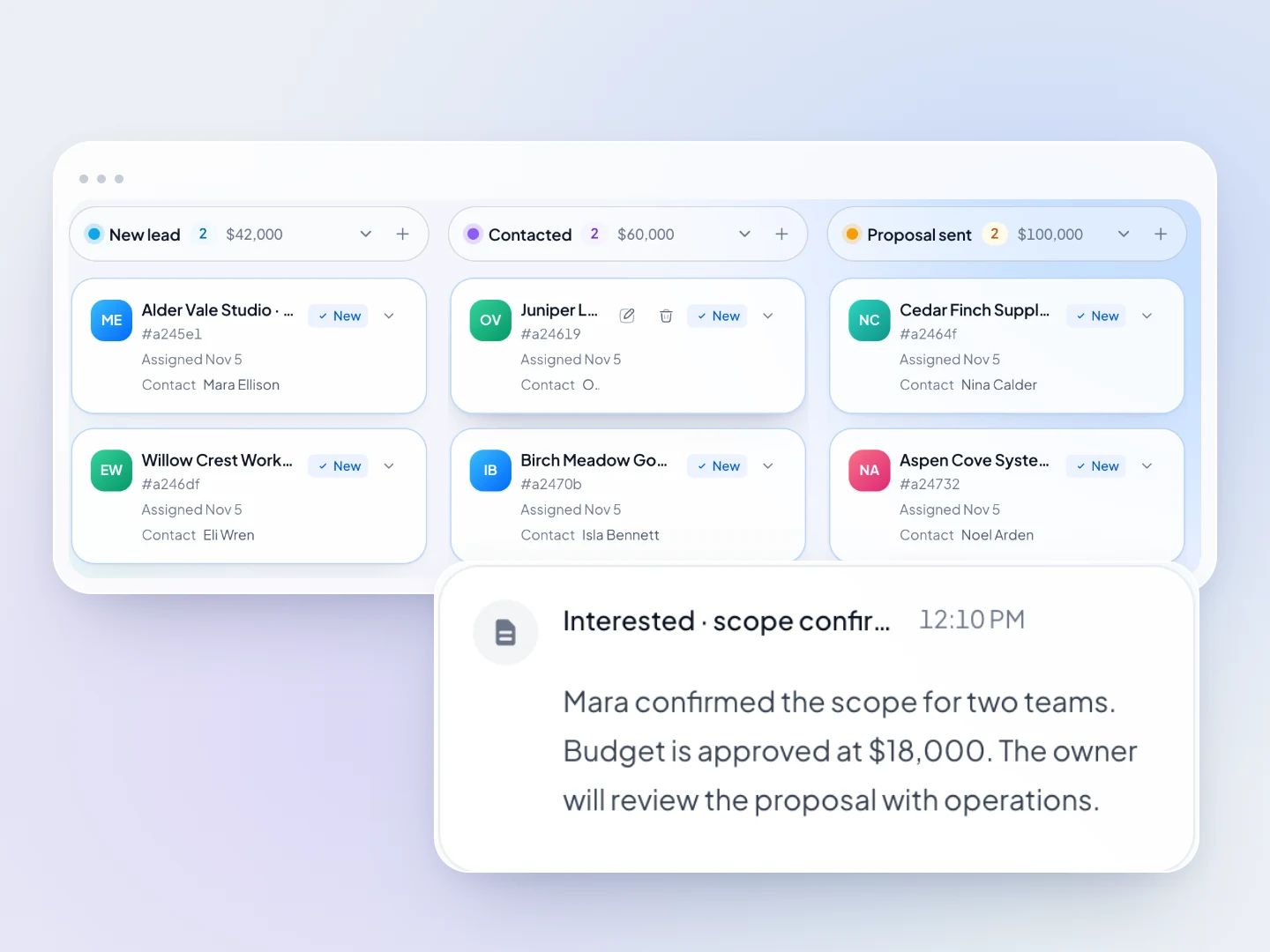
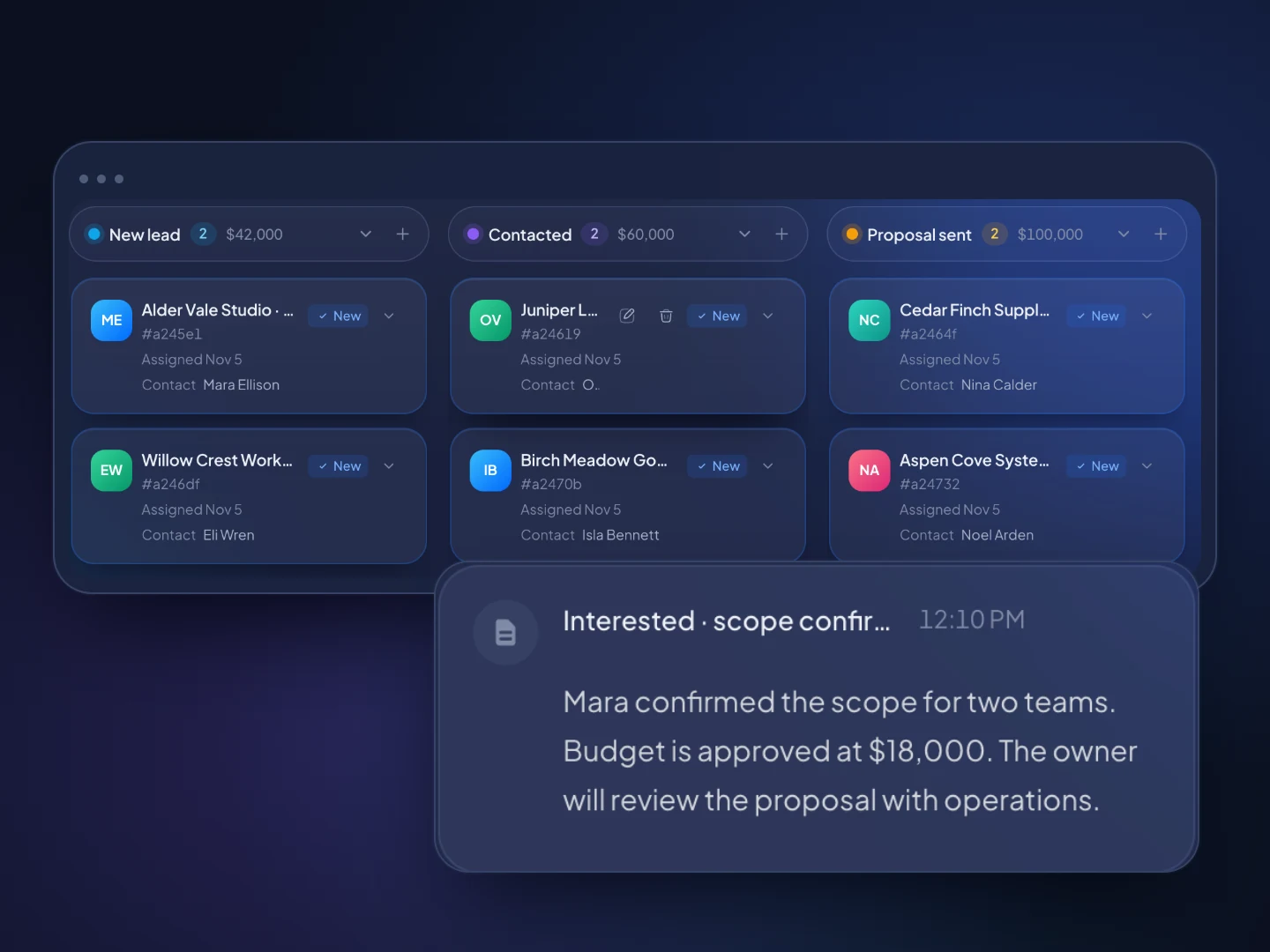
Drag each investor from contacted to meeting, soft-circled and committed. The pipeline shows the total value at every stage, so you can see what's signed and what's only promised.
CRM for fundraising
Whether you're raising a seed round, a first fund or the equity for a real estate deal, a raise is an outbound campaign: a list of investors, a lot of calls, steady follow-up and a pipeline from first contact to committed. TopReach runs all of it in one workspace, so you stop running the round from a spreadsheet and your inbox.
The raise, organized
What most founders spread across a spreadsheet, an inbox and a phone, kept in one place.
Drag each investor from contacted to meeting, soft-circled and committed. The pipeline shows the total value at every stage, so you can see what's signed and what's only promised.
Power dialing calls one investor after another, with their last note and next step on screen. Parallel dialing calls several numbers at once and connects you to whoever picks up.
When an investor doesn't answer, TopReach can leave a voicemail automatically, then send a text or an email on the days you choose. Every touch is tracked, so nobody gets the same message twice.
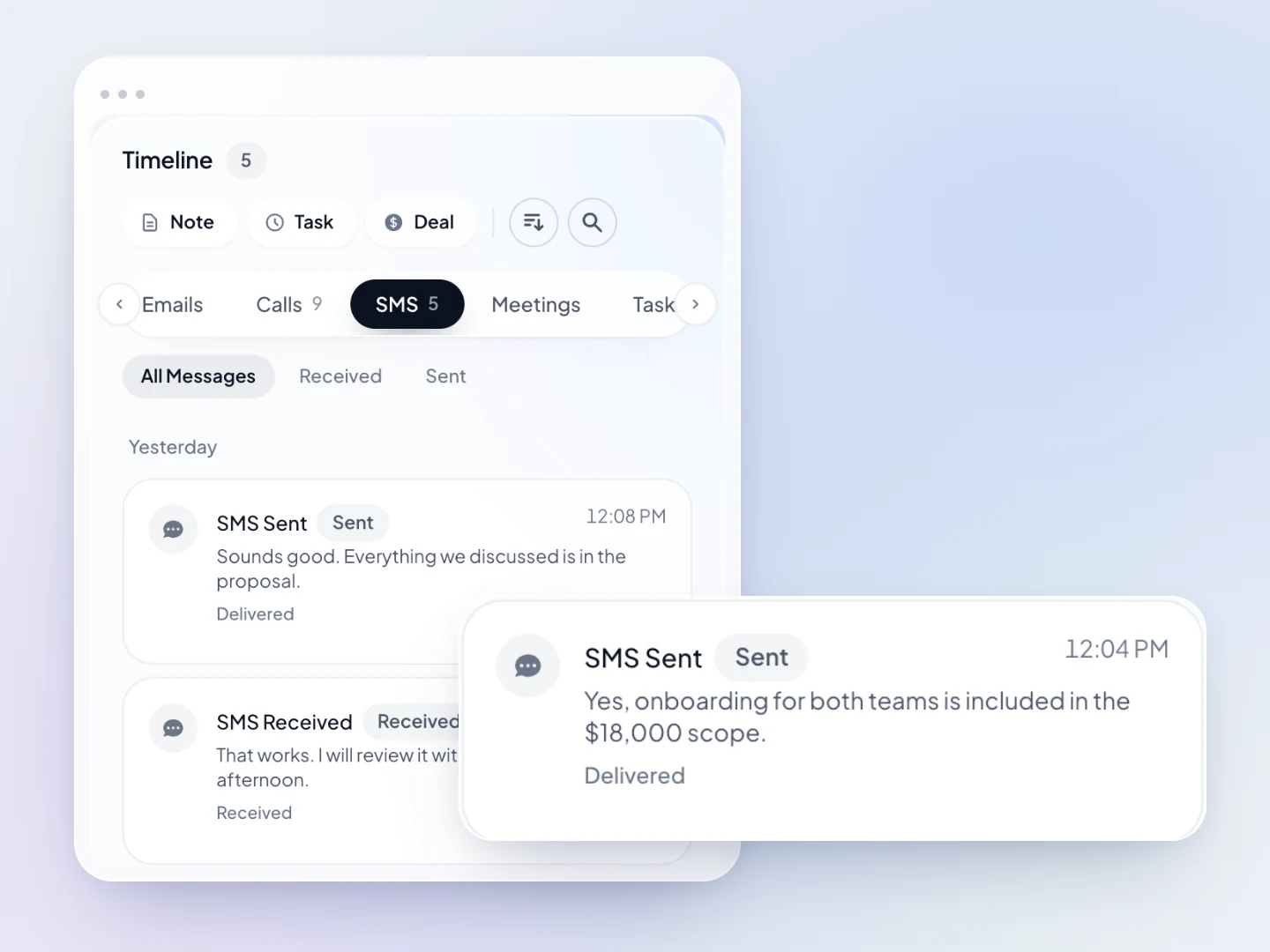
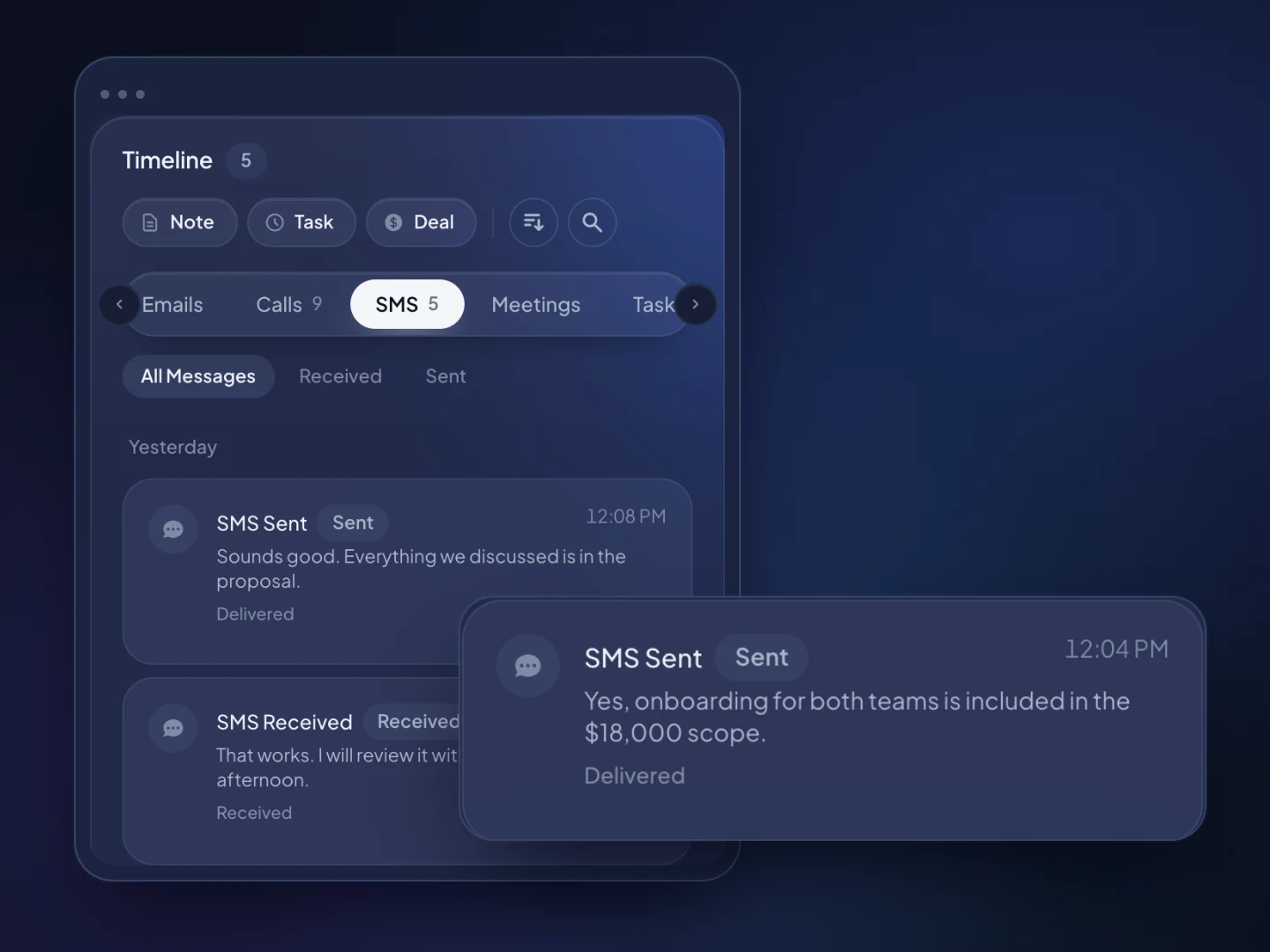
Calls, texts, emails, notes and call outcomes save to the investor's record. Anyone on your team can see who asked for the deck and what was promised.
Text investors from your business number. Replies land in a shared inbox and on the investor's timeline, next to your calls.
Record calls to review how the pitch landed, and save the email templates the whole team sends from, such as the intro, the deck follow-up and the data room invite.
The pipeline
Every investor as a deal, with the value at each stage from first contact to committed.
How it works
Upload the spreadsheet you already have. TopReach finds the phone number in whichever column you used, and custom fields hold check size, focus and who made the intro.
Set aside an hour, start the power dialer and work down the list. The call screen shows each investor, your last note and what to do next, and the outcome saves when you hang up.
Unanswered calls get a voicemail and a text or email on the days you set. Move investors through your stages and watch the committed total grow.
Guide
Plenty of raises stall without a single hard no. Investors go unanswered, meetings never get booked and the round loses momentum. This guide covers how founders raising a seed or Series A, emerging fund managers raising from LPs and real estate sponsors raising from investors can organize their outreach, from sizing the list to tracking commitments, and what to look for in a CRM to run it.
A fundraise needs an outbound system because it is a time-boxed sales campaign: you have a target amount, a list of people who might invest and a few months to turn enough of them into commitments.
Most of that work is reaching people and following up. A seed founder can easily have 60 investor conversations at different stages at once. A first-time fund manager spends many months working through family offices, high-net-worth individuals and institutions. A real estate sponsor has a closing date and an equity gap to fill. In each case, the raise moves or stalls on whether the next step with each investor actually happens.
Most people start in a spreadsheet and Gmail. That works for the first twenty names. After that, status lives in someone's head, reminders live in a calendar nobody checks, two co-founders email the same partner a day apart, and the investor who said “call me after our partner meeting” never gets the call. None of these is a disaster on its own. Together, they cost you the momentum that gets investors to decide.
An outbound system fixes this with four things: one list of every investor you plan to contact, a pipeline that shows where each one stands, a record of every conversation, and follow-ups that are scheduled rather than remembered.
An investor pipeline should have one record per investor, an expected amount on each, and a short set of stages that each mean something specific and checkable has happened.
The amount makes the pipeline add up to dollars instead of names. Next to it, keep the handful of fields you'll sort and filter by: typical check size, stage or asset focus, whether they lead or follow, who made the introduction and who on your team owns the relationship. For US private offerings, add accreditation status. Fund managers will want LP type and minimum commitment. Real estate sponsors will want to know which offering each investor is looking at and which kinds of deals they prefer.
Vague stages like “interested” or “warm” cause trouble because nobody can agree when an investor has moved. A stage should change only when something observable happens: a meeting was held, documents were requested, a commitment was signed. A typical set looks like this:
Usually more than founders expect. A common range for a seed or Series A round is a target list of 100 to 200 investors, leading to meetings with 40 to 100 of them, and first-time fund managers often approach several hundred potential LPs. These are typical ranges founders and managers describe, not figures TopReach has measured, and your number depends on your network, your traction and the market.
A more reliable way to size your list is to work backwards from the amount you need. Say you're raising $2 million and typical checks from your target investors run $100,000 to $250,000. That's roughly 8 to 20 commitments. If about one in five first meetings turns into a commitment and about half the investors you contact agree to meet, you need 40 to 100 meetings and 80 to 200 contacts. Those ratios are illustrations, not benchmarks. Cold outreach converts lower than warm introductions, so a list with fewer intros needs to be bigger. Replace the ratios with your own after the first few weeks.
The list size matters because it sets your weekly workload. Two hundred investors over ten weeks is twenty new contacts a week, on top of follow-ups with everyone already in play. That's a lot of calls and messages to keep straight without a system.
Follow up on a steady rhythm, give every follow-up a reason and stop when you get a clear answer.
Investors expect follow-up, and silence after a good meeting can read as a lack of drive. What wears on them is the same “just checking in” note every few days with nothing new in it. A useful follow-up carries something: a new commitment, a lead investor, a product milestone, a revenue number or a closing date.
It depends on who you're raising from: institutional VCs mostly expect a warm introduction or an email, while angels, family offices, private LPs and real estate investors are often reached, and kept, by phone.
For a seed or Series A round with institutional funds, the usual first touch is an introduction from someone the investor trusts, followed by email. Cold-calling a VC partner you've never met rarely helps. The phone earns its place after the first meeting: a five-minute call to answer a diligence question or confirm timing moves faster than a week of email.
For emerging fund managers and real estate sponsors, calling is normal. Many private investors want to talk before they wire money, and a sponsor's past investors often expect a call when a new deal opens. Power dialing suits this work: you go through the list one call at a time, with the investor's last note on screen. Parallel dialing, which calls several numbers at once, fits a large list where most calls go unanswered. For a short list of high-value investors, dial one at a time.
Whichever channel you use, check the rules first. Calling or texting people you don't already know about a specific offering raises the securities and telemarketing questions covered at the end of this guide.
Count only signed commitments as raised, and treat everything else, including soft circles, as pipeline.
Rounds get overstated because soft circles feel like money. They aren't. Investors soft-circle and then go quiet, wait for a lead or shrink their check when terms change. Keep three numbers apart: committed (signed), soft-circled (verbal) and in diligence. The gap between your target and the committed number is what you still have to raise.
Check the pipeline weekly with three questions. Which soft circles haven't heard from you in two weeks? Which investors in diligence are waiting on something from you? Are this week's first meetings enough to reach your target at the conversion you're actually seeing? If the answer to the last one is no, you find out while there's still time to add names.
In TopReach, the deals pipeline shows the value at each stage, and each investor's timeline shows when you last spoke and what was said.
Look for a CRM that handles the outreach itself, meaning calls, texts, emails and reminders, rather than one that only stores names, because a raise is won on follow-through.
In practice, check for these: a pipeline with your own stages and a dollar amount on each investor; calling built in, with outcomes and notes saved to the investor; two-way texting and email from the same place, with replies in one inbox; scheduled follow-ups that don't depend on someone remembering; one timeline per investor showing every call, text, email and note; custom fields for check size, focus, intro source and accreditation; shared access for a co-founder, partner or IR lead, with clear ownership; and import from the spreadsheet you already have.
TopReach covers the outreach side of a raise: contacts, a deals pipeline with value by stage, power and parallel dialing, two-way texting with a shared inbox, email follow-ups, tasks and reminders, and call recordings. Pricing is $55/seat a month ($49/seat billed yearly), plus a $99/month phone licence for each person who calls, covering every dialer mode with 3,000 minutes included and $10/month per phone number, with a 14-day free trial and no setup fees.
It doesn't do everything a raise needs. TopReach doesn't supply investor lists or contact data, and it isn't a data room or an e-signature tool, so you bring your own list and keep those tools for diligence and closing.
Yes, and they depend on how you're raising and where your investors are, so talk to securities counsel before you start outreach. What follows is general information, not legal advice.
FAQ

Investor pipeline, calling, texting and follow-up in one workspace. Start a 14-day free trial, or talk to us about your raise.