Guide
How law firms run intake and follow-up by phone and text
Most new matters start with a phone call, a web form or a referral, and a firm that answers promptly and tracks every inquiry gives itself the best chance of being hired. This guide covers how to organize intake, return inquiries quickly, track prospective clients on a pipeline, reduce consultation no-shows, look after referral partners and clients, and the ethics and calling rules to check. It is not legal or ethics advice.
What does good law firm intake look like?
Good intake means every inquiry gets a prompt, human response, a consistent set of questions and a clear next step, and none gets lost between the first message and the consultation. It needs an owner; it can't be something attorneys squeeze in between hearings.
In a small firm, intake usually falls to one or two people, such as a receptionist, an intake specialist or a paralegal, with an attorney deciding which matters to take. Whoever does it needs every open inquiry in one place, with its status and next step. Inquiries tend to arrive through a few channels:
- Calls and voicemails to the firm's main number
- Website forms, chat and email
- Referrals from other lawyers, past clients and professionals such as accountants and financial planners
- Responses to directory listings and advertising
How quickly should a law firm return a new inquiry?
As soon as you can: ideally within the hour during business hours, and the same day at the latest. People looking for a lawyer often contact more than one firm, and the first firm to hold a real conversation has an advantage.
Because these people contacted you, calling back is a response, not a cold call (more on the ethics rules below). Keep the follow-up reasonable, though. If someone stops responding after a few attempts or says they've hired another firm, close the inquiry and stop.
In TopReach, an unanswered callback can trigger the follow-up: a dropped voicemail, then a text or email on the days you choose, with every touch logged so nobody repeats a message. Write those messages so they're safe for anyone to hear or read, since a spouse, an employer or the other side of a dispute may share the phone. A simple plan for an inquiry you can't reach:
- First attempt: call within the hour. If there's no answer, leave a short voicemail with your name, the firm and a callback number, and nothing about their legal matter.
- Same day: a text, if they gave a mobile number and agreed to texts, or an email saying you're returning their inquiry and how to reach you.
- Next business day: a second call at a different time.
- Days 3 to 5: one more call and a final message. Then close the inquiry as Not retained, with the reason, unless they get back to you.
What intake pipeline stages should a law firm use?
Use stages that match the decisions your firm actually makes, from first contact to a signed engagement, and keep the CRM to what intake needs. The facts of the matter, deadlines and documents belong in your practice management or docketing system. TopReach doesn't run conflict checks, calculate deadlines or store documents.
Custom fields and tags hold what intake staff need on the next call: practice area, matter type, county or court, how the person found you, the referring lawyer or partner, the consultation date and the assigned attorney. Tags such as Referral, Former client or Consultation no-show make follow-up lists easy to build.
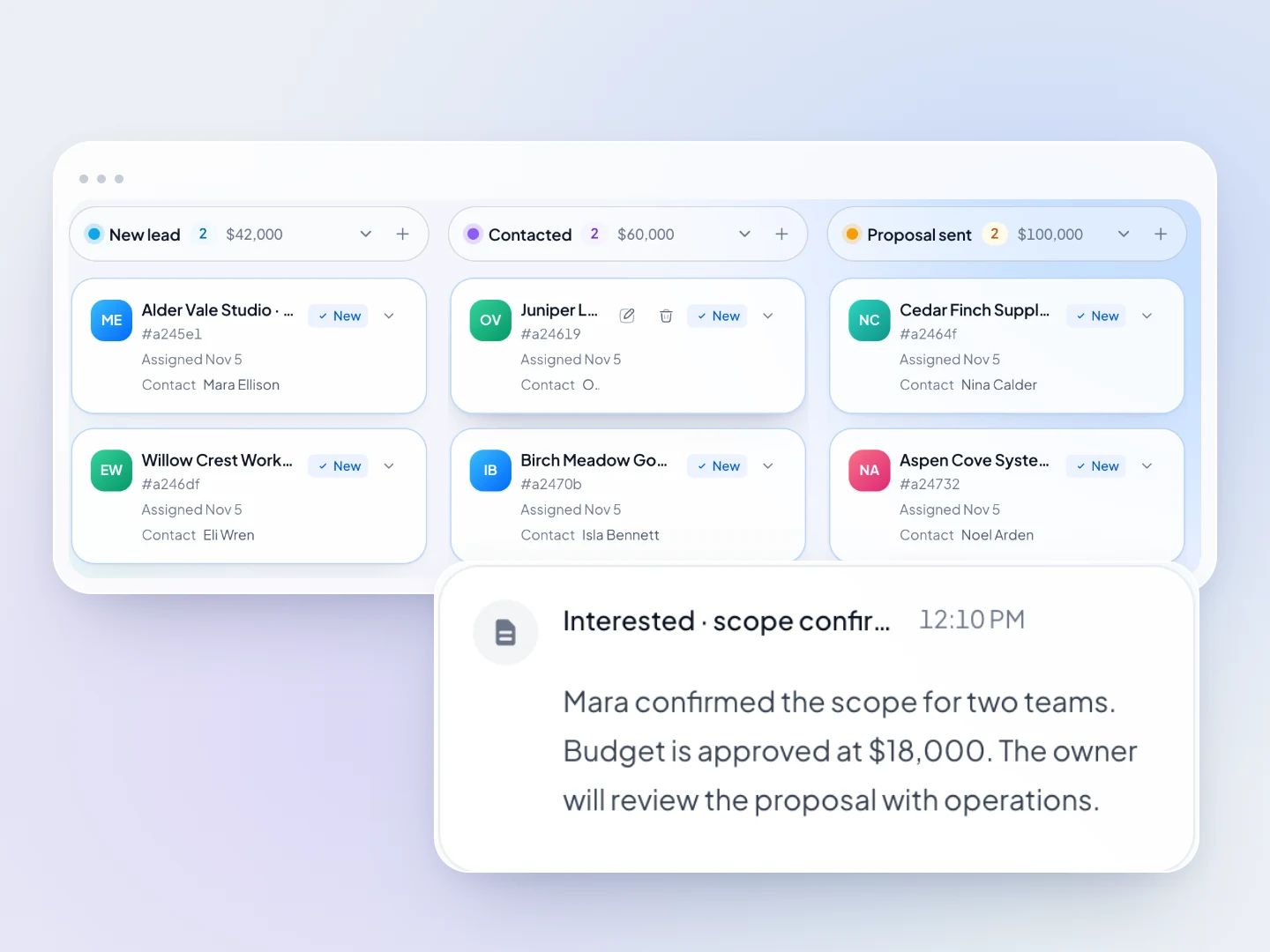
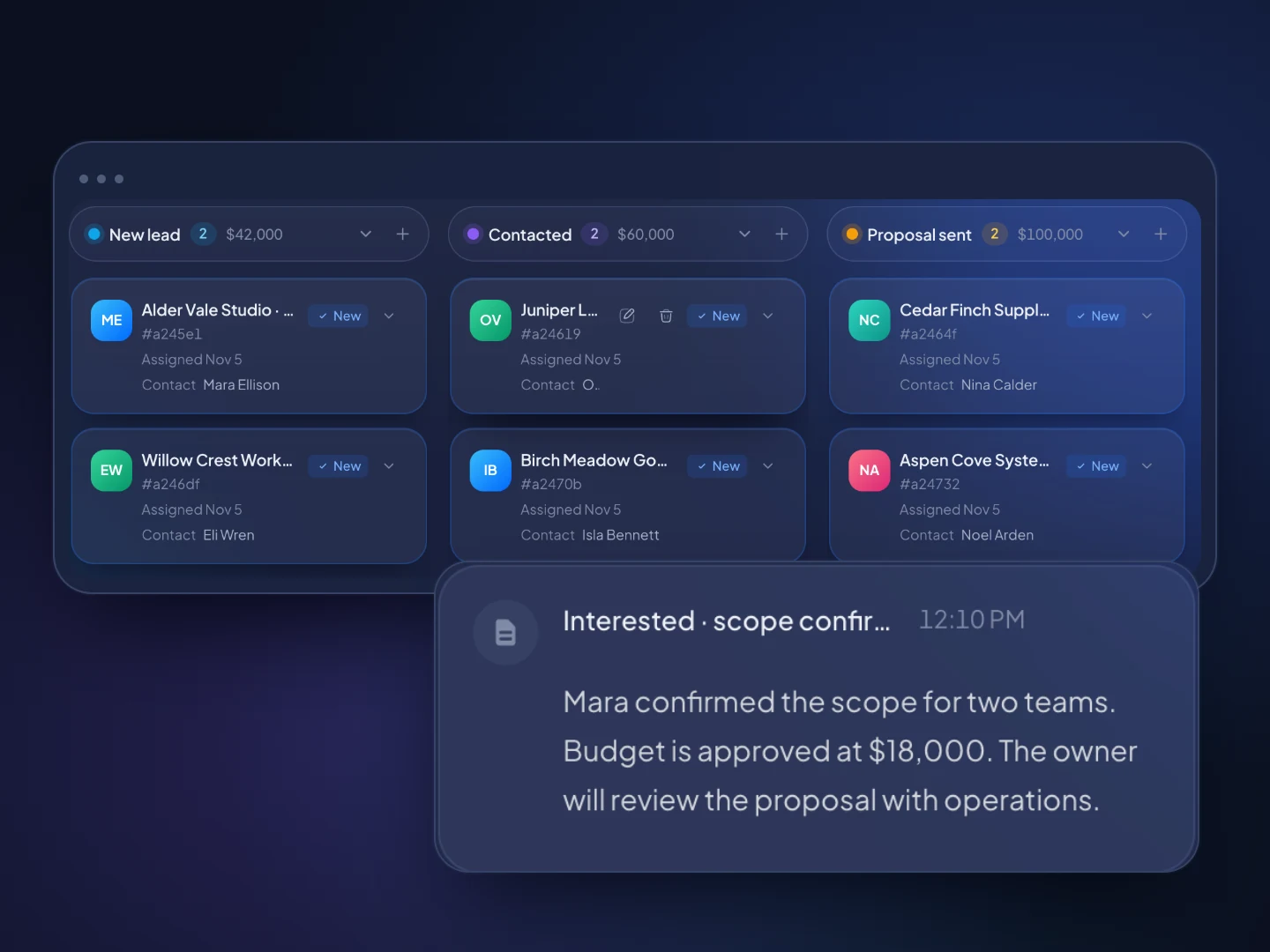
In TopReach, intake stages are drag-and-drop stages on the deals pipeline. A common set:
- New inquiry: received, not yet reached
- Contact attempted: calls or messages sent, no conversation yet
- Intake call done: basic facts gathered
- Conflict check: names sent through your conflict system
- Consultation scheduled, then Consultation held
- Engagement sent: fee agreement out for signature
- Retained, or Not retained with a reason, such as a conflict, outside your practice areas, hired another firm or referred out
How do you reduce consultation no-shows?
Confirm every consultation by text the day before and on the morning of the appointment, and make rescheduling easy. A reminder gives the person a simple way to move the time instead of not coming.
In TopReach, set a reminder task for each confirmation. Intake staff send the text from the contact's record, and replies land in a shared inbox the whole intake team can answer. Keep reminders to logistics, such as the date, time, address or video link and what to bring, and leave out the details of the matter.
If someone misses a consultation, call the same day to reschedule. Tag them Consultation no-show so you can see whether certain sources or practice areas miss more often.
How should a firm work referral partners and stay in touch with clients?
Treat client updates as a duty and referral relationships as a call list with a rhythm.
Model Rule 1.4 requires lawyers to keep clients reasonably informed, and not hearing from their lawyer is a common client complaint. A reminder task to check in with each active client, logged on their timeline, keeps those calls from slipping. Keep case details out of texts unless your firm has decided that's appropriate.
Referrals from other lawyers, past clients and professionals such as accountants, financial planners and real estate agents are a steady source of good matters, and they depend on the firm staying in touch. A simple routine:
- Add referral partners as contacts with a Referral partner tag and a custom field for the kinds of matters they send.
- Call each one on a regular rhythm, such as quarterly, and log what you learn.
- When a partner sends a matter, record them as the source and thank them, without sharing anything your client hasn't agreed you can share.
- Firms that serve businesses can call companies and in-house counsel who routinely use the kind of legal services they offer, which Model Rule 7.3 permits. Check your state's version.
Should a law firm use a power dialer or a parallel dialer?
Use power mode. Power dialing calls one number after another from your list, so whoever answers reaches a member of the intake team who can see their record. That suits a morning of returning yesterday's inquiries, consultation confirmations or quarterly calls to referral partners.
Parallel mode calls several numbers at once and connects the caller to whoever picks up, and when two people answer, one gets dropped. It's built for large cold lists, and a law firm shouldn't be cold-calling people who may need a lawyer. Someone who asked for help and gets a dropped call has a poor first experience of your firm. TopReach includes both modes in the one $99-a-month phone licence, but most firms will only use power mode.
What ethics and calling rules apply to law firm calls and texts?
Law firm calls are shaped by the rules of professional conduct as well as the calling laws every business follows. Rules differ by state, so treat this as an overview and check with your ethics counsel or state bar before you change how you contact people.
TopReach keeps a do-not-call list and handles texting opt-outs, so a request not to be contacted applies across the firm. Whether a particular call or text is permitted is a judgment for your firm and its counsel.
- Solicitation: ABA Model Rule 7.3 bars live person-to-person solicitation, including live phone calls, when a significant motive is pecuniary gain, unless the person is a lawyer, has a family, close personal or prior business or professional relationship with the lawyer or firm, or routinely uses that type of legal service for business. Responding to a request for information is generally not solicitation. States adopt their own versions, and some are stricter.
- Written outreach: texts and emails to people who haven't contacted you can count as solicitation or advertising under state rules, and some states require labels, waiting periods or filing. Model Rule 7.2 limits paying for referrals.
- Confidentiality and recording: Model Rule 1.18 protects information from prospective clients even if you don't take the matter, and Rule 1.6 covers client information. Intake recordings and notes may hold privileged or confidential information, so decide with your ethics counsel whether to record intake calls at all, who can listen, how long to keep recordings and which vendors to trust with them. In TopReach, an admin sets recording for the whole workspace: every call, no calls, or each user's choice.
- Recording consent: some states, including California and Florida, require every party's consent to record a call, so tell callers when a call is recorded.
- Cell phones: under the TCPA, autodialed or prerecorded calls and texts to cell phones generally need prior express consent, and a dropped voicemail is a prerecorded message. Have counsel review the consent wording on your intake forms.
- Canada: provincial law society rules govern marketing legal services, CASL covers texts and emails, and the CRTC's rules cover telemarketing.