Guide
How financial advisors use the phone for prospecting and client reviews
For most advisors the phone does two jobs: finding new clients and keeping current ones on a review schedule. This guide covers the calls a practice makes, the stages and fields that keep them organized, how to run review calls and prospecting, which dialer mode fits and the rules to clear with compliance first. If you run a placement or capital-raising desk, our page on CRM for investment firms is a closer fit.
Which calls fill a financial advisor's week?
Five kinds of calls cover most practices, and each works best as its own list with its own rhythm.
The hard part is protecting time for them. Calls squeezed between meetings rarely happen, so many advisors block an hour or two on a few mornings a week and treat it like a client meeting. Practices with an assistant often split the work: the assistant books reviews and confirms meetings, and the advisor makes the referral and prospecting calls.
- Client reviews: calls to book each client's annual or semi-annual review.
- Referrals and introductions: calls to people a client, accountant or estate attorney sent your way.
- Event follow-up: calls to seminar and webinar guests within a day or two of the event.
- Service and life-event calls: an upcoming retirement date, a business sale, required minimum distributions, or a check-in after a rough stretch in the markets.
- Prospecting: calls to people who asked for information and, where your firm allows it, cold calls.
What pipeline stages fit an advisory practice?
Use stages that follow how a prospect becomes a client: Prospect, Intro call, Discovery meeting, Plan presented, Paperwork, Assets transferring, Client and Not now. Keep the list short so everyone in the practice uses it the same way.
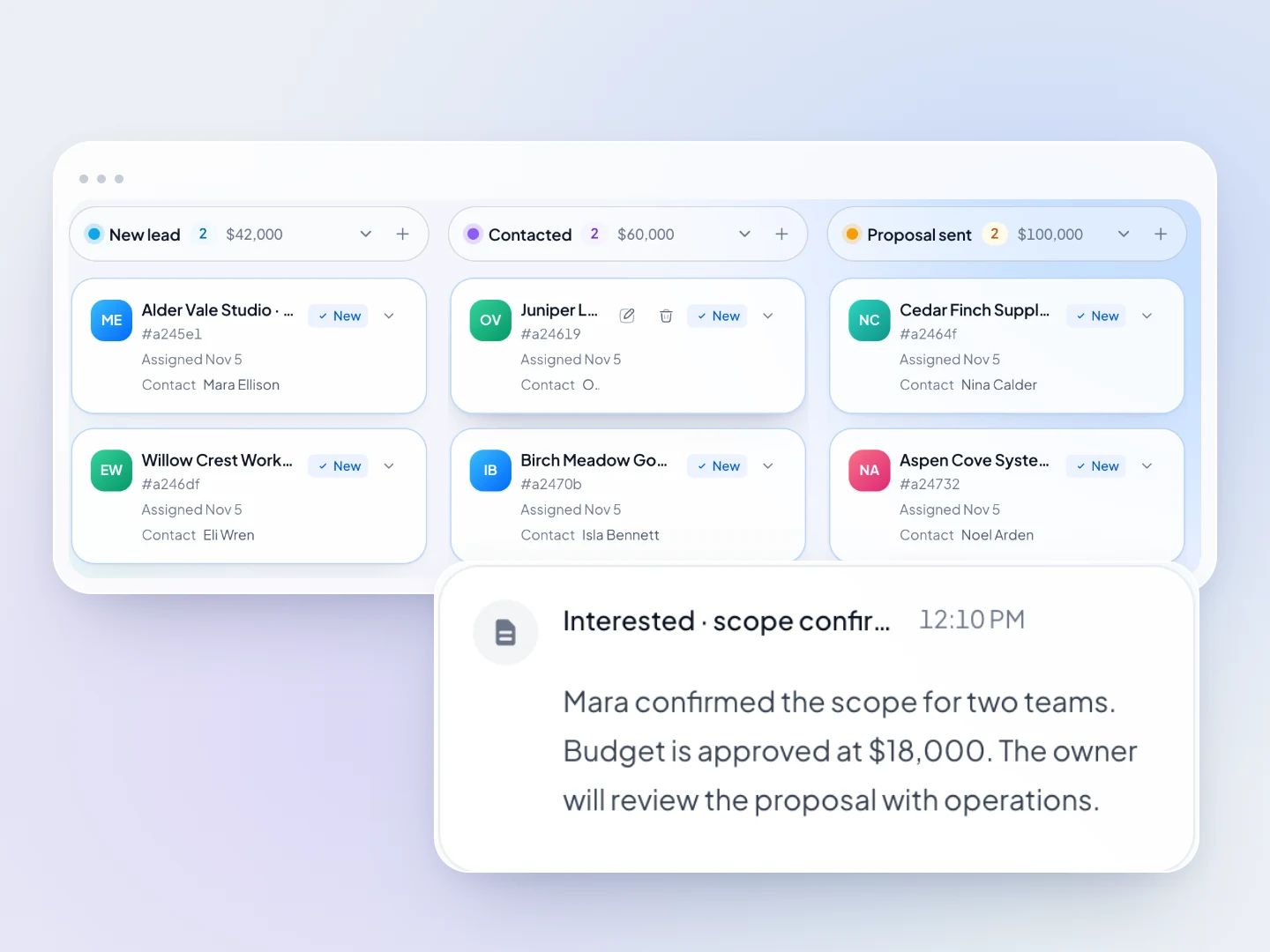
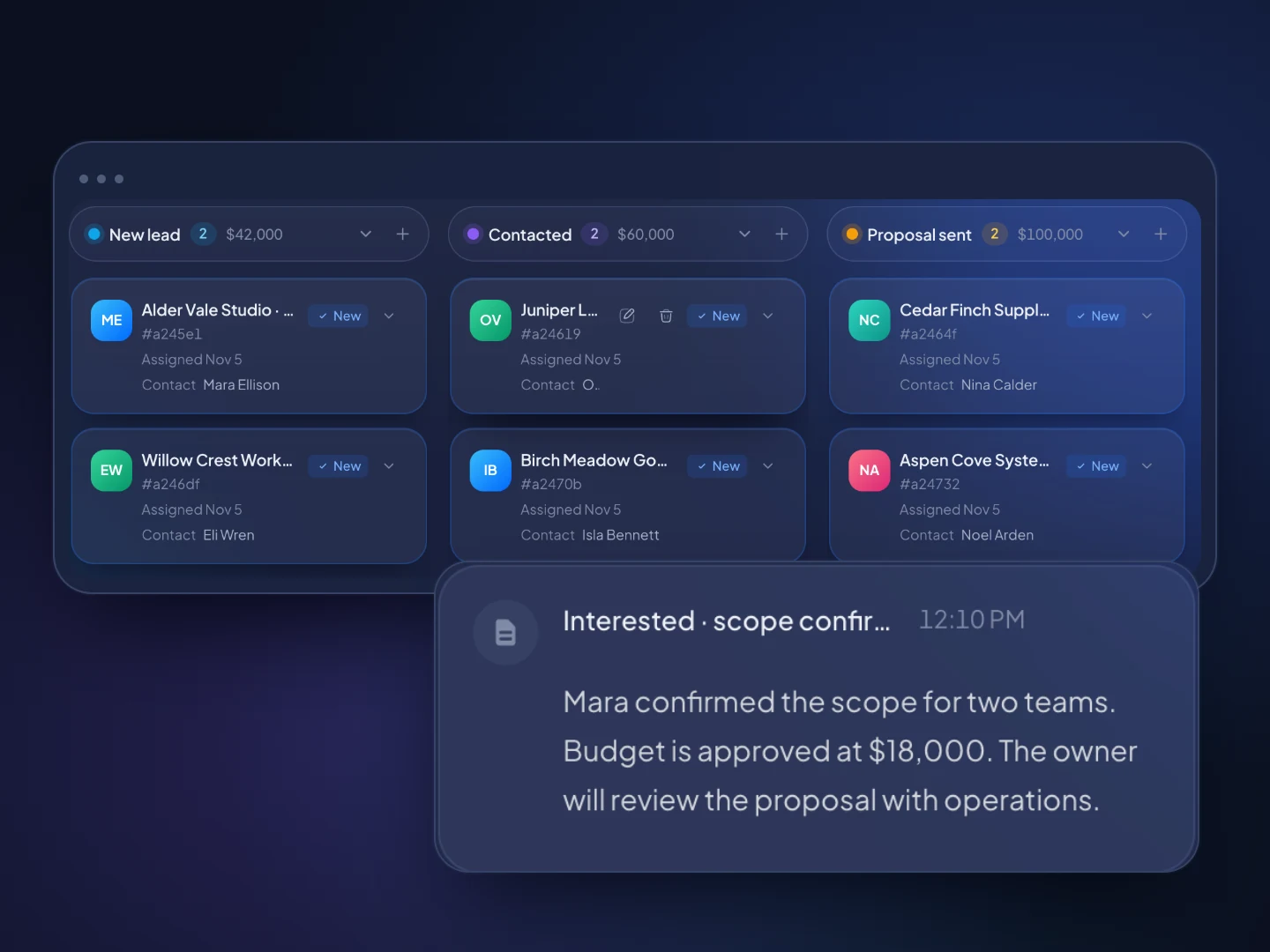
In TopReach, each prospect is a deal on a drag-and-drop pipeline, and the pipeline shows the value at each stage. Pick one measure for the value, such as expected assets or expected first-year revenue, and stick to it so the totals mean something. Not now is a stage, not a deletion: set a reminder for when they said to call back.
Once someone signs, the work moves from the pipeline to onboarding. TopReach has projects for work after the sale, which suit an onboarding checklist such as account transfers, paperwork follow-up and the first review.
Look at the pipeline once a week: who is waiting on paperwork, which discovery meetings haven't had a follow-up call and how many intro calls turned into meetings. TopReach reports conversations and outcomes per person, with leaderboards, so a practice with associates can see who is making calls and what comes of them.
What should advisors keep in custom fields and tags?
Keep what you need to decide who to call and what to say. Leave account numbers, Social Security numbers, know-your-customer records and suitability files in your custodian's and your firm's own systems.
In TopReach, custom fields and tags sit on each contact, and saved lists or dynamic lists built from rules on them become your call lists.
- Relationship status and service tier, such as A, B or C clients
- Review month and last review date, so a dynamic list can pull this month's reviews
- Referral source, such as the client, accountant or attorney who introduced them
- Life stage and interests: retirement income, education savings, a business sale or insurance needs
- A rough asset band, if your firm is comfortable recording it
- Tags for events attended, clients taking required minimum distributions and anyone who prefers email to calls
How do you run client review calls?
Put every client on a review cycle and call to book reviews at the start of each month. Top-tier clients often get two reviews a year and everyone else one, but keeping to a cycle matters more than the exact count.
In TopReach, a dynamic list built from the review-month field gives each advisor or assistant this month's list without anyone rebuilding it. Power-dial the list, put the meeting on the calendar while the client is on the phone, and log the outcome. When a client doesn't answer, TopReach can drop a voicemail and then send an email on the days you choose, or a text if your compliance team allows texting.
Use the booking call as a service call too. Ask what has changed in the past year, note it on the timeline and set tasks for anything you promised. Over time the timeline becomes the history an assistant or a successor needs to pick up the relationship.
How should advisors prospect by phone?
Start with warm prospects and work outward. Referrals, introductions from accountants and attorneys, and event guests are usually more receptive than a cold list, and calling people who asked to hear from you raises fewer rule questions.
Call an introduction within a day or two, while the referrer's name still means something, and call event guests the day after. Ask for a short discovery meeting, not a decision. If there's no answer, let the voicemail and an email follow and try again over the next week. After four or five attempts, move them to Not now with a date to try again.
Keep in touch with your referral sources on a schedule. Tag each accountant and attorney you work with and call them monthly or quarterly to share something useful and ask how you can help their clients.
Have compliance approve your scripts and voicemail wording. What you say about services, fees or performance can be a regulated communication.
Should advisors use a power dialer or a parallel dialer?
Use power mode. Power dialing calls one number after another, so whoever answers reaches an advisor, and the next call starts as soon as the last one ends. That suits review calls, referrals and event follow-up, where every contact is someone you know or were introduced to.
Parallel mode calls several numbers at once and connects the advisor to whoever picks up. When two people answer, one gets dropped, which may be acceptable on a large cold list and is the wrong risk with a client. Most advisory practices won't need it; if yours runs large cold campaigns, clear the dialing method with compliance first. Both modes come with the same $99-a-month phone licence.
What compliance rules apply to advisor calls and texts?
Advisors answer to communications and recordkeeping rules on top of telemarketing law, and the details depend on whether you work with a broker-dealer, a registered investment adviser or both. Clear any new calling or texting tool with your compliance team before you use it with clients. This is a general overview, not legal advice.
TopReach keeps a do-not-call list and handles texting opt-outs. What your firm must capture, supervise and keep is for your compliance team to decide.
- Communications: FINRA Rule 2210 covers broker-dealer communications with the public, and the SEC Marketing Rule covers investment adviser advertisements. Texts, voicemails and scripted calls can fall under them.
- Recordkeeping and supervision: broker-dealers keep business communications under SEC Rule 17a-4 and FINRA Rule 4511 and supervise them under FINRA Rule 3110, and advisers keep certain records under Advisers Act Rule 204-2. Regulators have fined firms heavily over business texts sent from personal phones and never captured.
- Archiving: many firms require client texts and other written communications to be captured by an approved archiving vendor. TopReach records calls and keeps a timeline of every call, text, email and note, but it is not a compliance archive and doesn't send messages to one.
- Telemarketing: FINRA Rule 3230, the TCPA and the National Do Not Call Registry set calling hours, do-not-call duties and consent rules for calls and texts to prospects. A dropped voicemail is a prerecorded message.
- Call recording: some states require everyone on the call to agree before it's recorded, and a recording may itself be a record your firm must keep.
- Canada: CIRO and provincial securities regulators set communications and recordkeeping rules, and the National Do Not Call List rules and CASL apply to outreach.